

Magnifica Humanitas is a Brilliant Application of Catholic Social Doctrine
Pope Leo XIV’s First Encyclical
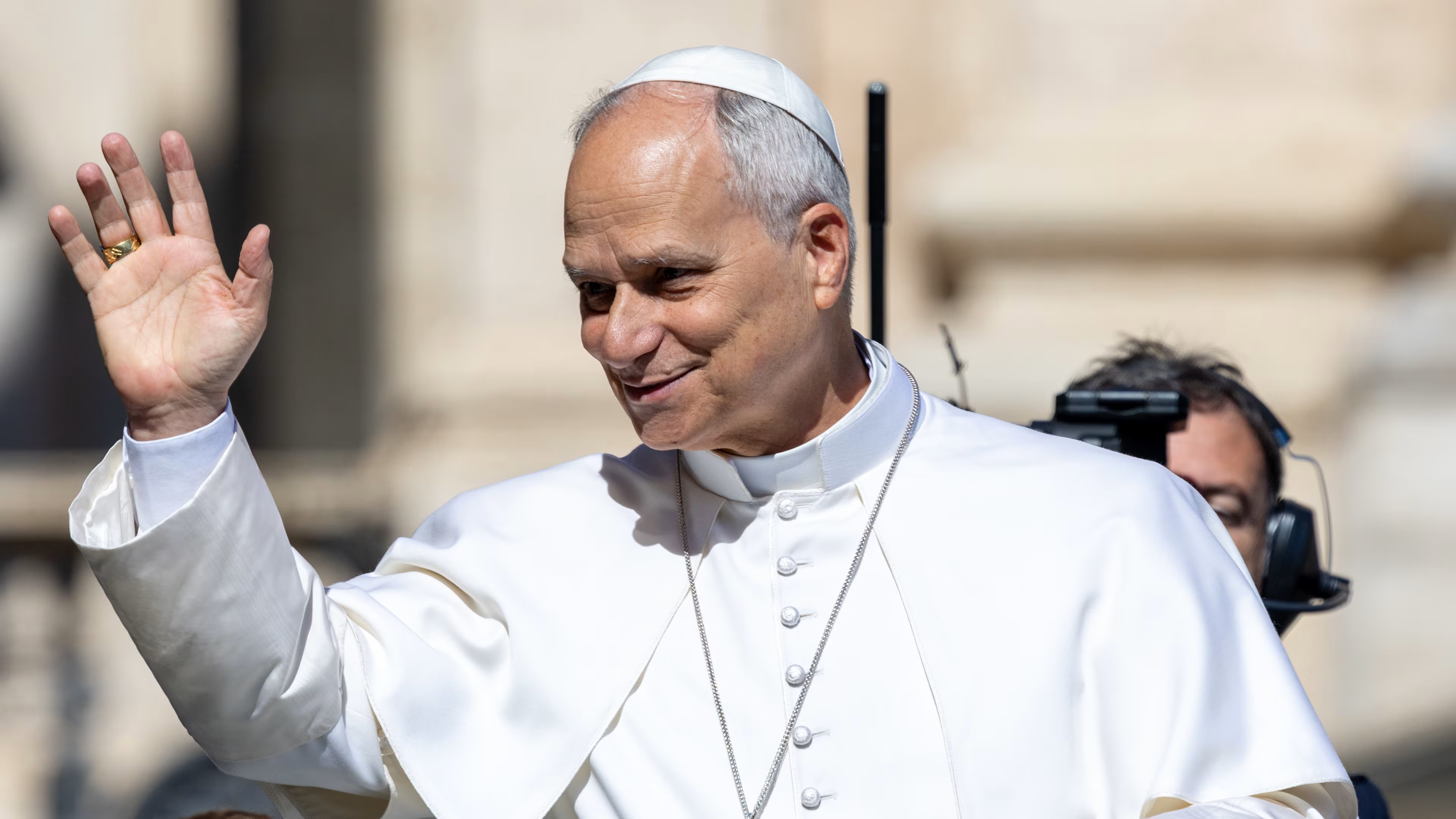
In 1891, Pope Leo XIII issued a groundbreaking encyclical letter called Rerum Novarum—the “New Things.” In that letter, Pope Leo applied 1900 years of the development of Catholic theology to the moral, social, economic, and political crises and challenges caused by the industrial revolution of the nineteenth century. Thus did Pope Leo set in motion what we now call the “Social Doctrine of the Catholic Church.” The new things catalogued in Rerum Novarum were not new doctrines or teachings of the Church. Rather, the new things were the particular challenges posed by the effects of the radical transformation of work, economy, political and regulatory structures, family, and the rippling impacts of this transformation across a myriad of social institutions. One hundred thirty-five years later, Pope Leo XIV has issued perhaps the most timely and important successor to Rerum Novarum, his first encyclical, Magnifica Humanitas.
Magnifica Humanitas is also addressing challenges presented by new things—“res novae”—as Leo XIV puts it in Latin. But these new things are not the processes of production and the rise of new mechanical technology. Rather, the chief concern of Pope Leo’s worthy successor to Rerum Novarum is the rise of artificial technology in particular, and the rapid digital transformation of human institutions more generally. The teaching that Leo XIV applies to these challenges is not new; it is as venerable as those doctrines applied by Leo XIII in 1891, which themselves are rooted in the very pages of Sacred Scripture, beginning with the first chapter of Genesis.
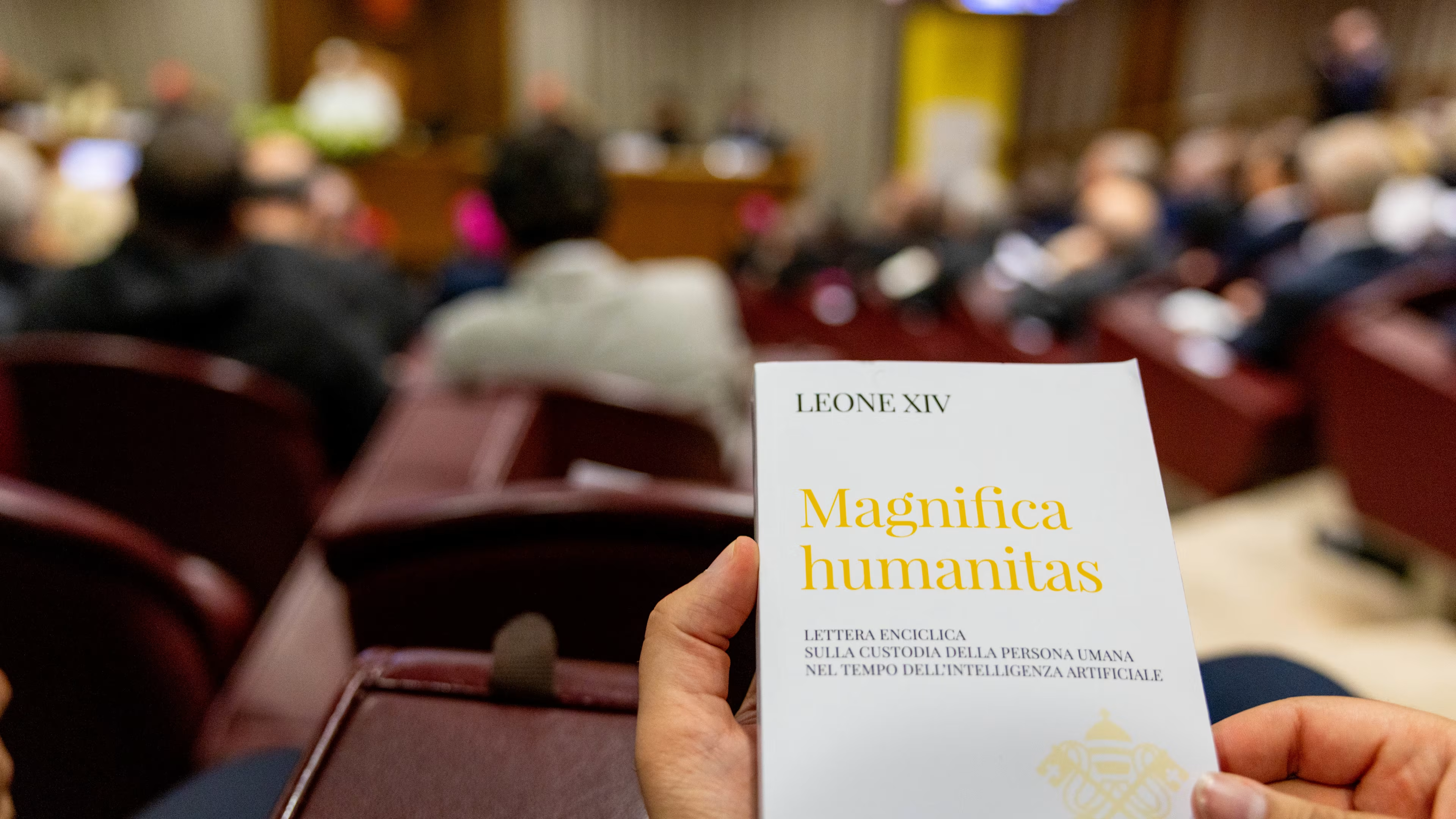
In 2026 as well as in 1891, the protection of human moral agency and development of the human person, made in the image and likeness of God, is the overwhelming concern. Like the industrial revolution before it, the digital revolution presents exciting new opportunities for human growth and development. But, again like the 19th century revolution—the 21st century revolution also presents great challenges and potential for grave injustices.
This brief analysis cannot do justice to the Pope Leo XIV’s 43,000 word encyclical, which I encourage everyone to read for themselves. That said, however, at least two important themes emerge from Magnificat Humanitas that are especially noteworthy as an introduction to the document. The first is Pope Leo’s use of two biblical images as his paradigm of analysis. The second is the Holy Father’s emphasis on the proper nature and role of human communication.
Babel or Nehemiah?
Leo XIV frames the encyclical around two contrasting biblical narratives of attempting to build something: the Tower of Babel from Genesis 11 and the new walls of Jerusalem in Nehemiah 2 through 6. The attempt to build the Tower of Babel, the Pope explains, sought “homogenization over communion.” But when a city “is built on pride and the claim of self-sufficiency, communication breaks down, languages are confused and people no longer understand each other. The result is not unity but dispersion” (Sect. 7).
Pope Leo contrasts the prideful assertion of autonomy of Babel with Nehemiah’s humble solicitation of cooperation and mutual assistance in rebuilding Jerusalem. Nehemiah “did not impose solutions from above. He convened the families, assigned each of them a section of the wall to rebuild, listened to their concerns, [and] coordinated their efforts” (Sec. 8). Babel was built on a foundation of pride and assertions of self-sufficiency; the walls of Jerusalem on a foundation of humility, the recognition of mutual dependency.
Technology was not the problem in either case. Both projects necessarily utilized technology, which has the capacity for good or evil uses. The issue, rather, was the framework for understanding the purpose of technology, and the use to which that technology was put. “Technology has the power to heal, connect, educate and protect our common home,” explains Leo XIV; “but it can also divide, exclude and generate new forms of injustice.” As applied to human institutions, “technology is never neutral, because it takes on the characteristics of those who devise, finance, regulate and use it,” the Pope explains. Thus, “the primary choice is not between a ‘yes’ or ‘no’ to technology, but rather between constructing Babel or rebuilding Jerusalem.” The contrast, he continues, is “between a power that claims to dominate the heavens and a people who work together in the presence of God to rebuild the walls of fraternal coexistence” (Sect. 9).
And what is the standard by which we can judge which is which? The integrity and dignity of the human person. Does technology isolate and divide people from one another? Does it attempt to displace human creativity, emotional development, and authentic interpersonal development? Does it subsume human work rather than to aid in the development of work? Does it supplant authentic communication with assertions of unfettered, unregulated, and destructive uses of speech and communication tools? If the answer to any of these questions is affirmative, we are building a Tower of Babel, rather than the new walls of Jerusalem.
On the other hand, does our use of artificial intelligence maintain the integrity of human moral agency? Does it contribute to human creativity and spiritual development? Does digital technology make our work more humane and productive of the flourishing of the human person? Does it contribute to human dignity, subsidiarity, solidarity, and the common good? If the answer to these questions is in the affirmative, AI and digital technology are goods to be developed.
Put another way, the question is whether and how the new things of our digital revolution are divorced from the nature of the human person, or do they contribute to the proper development of the human person. Digital technology divorced from the common story of the human person made in God’s image and ordered toward love of God is just as destructive of human flourishing as unfettered industrial technology. Magnifica Humanitas is Pope Leo XIV’s initial contribution to the history of Catholic Social Doctrine magnificently lays out a program for the proper use of digital technology and artificial intelligence. As such, like his predecessor in 1891, Leo has laid a solid foundation for the continuing development of a more hopeful future, applying the Church’s ancient wisdom.
The Author