

Thousands convene in Assisi to pray before bones of St. Francis on first day of historic viewing
Nearly 400,000 people are expected to venerate the saint’s relics while on public display through March 22.
Hundreds of pilgrims lined up before dawn on Sunday to be among the first to pray before the exposed relics of St. Francis in his basilica in Assisi, Italy.
The saint’s bones will lie in a glass box through March 22 — fully visible outside the stone tomb in a crypt where they usually rest — as hundreds of thousands of people venerate the holy remains.
A highly organized system with QR code reservations allowed approximately 750 people to enter the lower church of the basilica every 30 minutes through most of the day Feb. 22 to view the saint.
Filing past 13th-14th century frescoes by Cimabue and Giotto, pilgrims on the chilly but sunny winter day approached the glass case, protected by a plexiglass barrier. Some were overwhelmed with emotion as they had the opportunity to stand a foot away from what still exists of St. Francis on earth 800 years after his death, according to Jacob Stein.
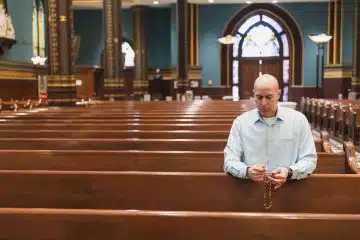
Stein, the creator of Crux Stationalis blog and part of the social media team of EWTN News, was among the first group to arrive at the church. Despite the crowds, he described the atmosphere in Assisi and in the presence of the relics as prayerful and unrushed. Inside the basilica, where cellphone use was forbidden, friars gently recalled the pilgrims to silent recollection when voices got above a whisper. People knelt before St. Francis and kissed the glass and left their written prayers in boxes shared by the Franciscans.
“My prayer afterwards was to the wounds of Christ, to honor them,” Stein said, referring to St. Francis’ stigmata. This moment helps you to understand that the devotion for St. Francis is because of “his conformity to Christ as a complete and utter example to follow.”
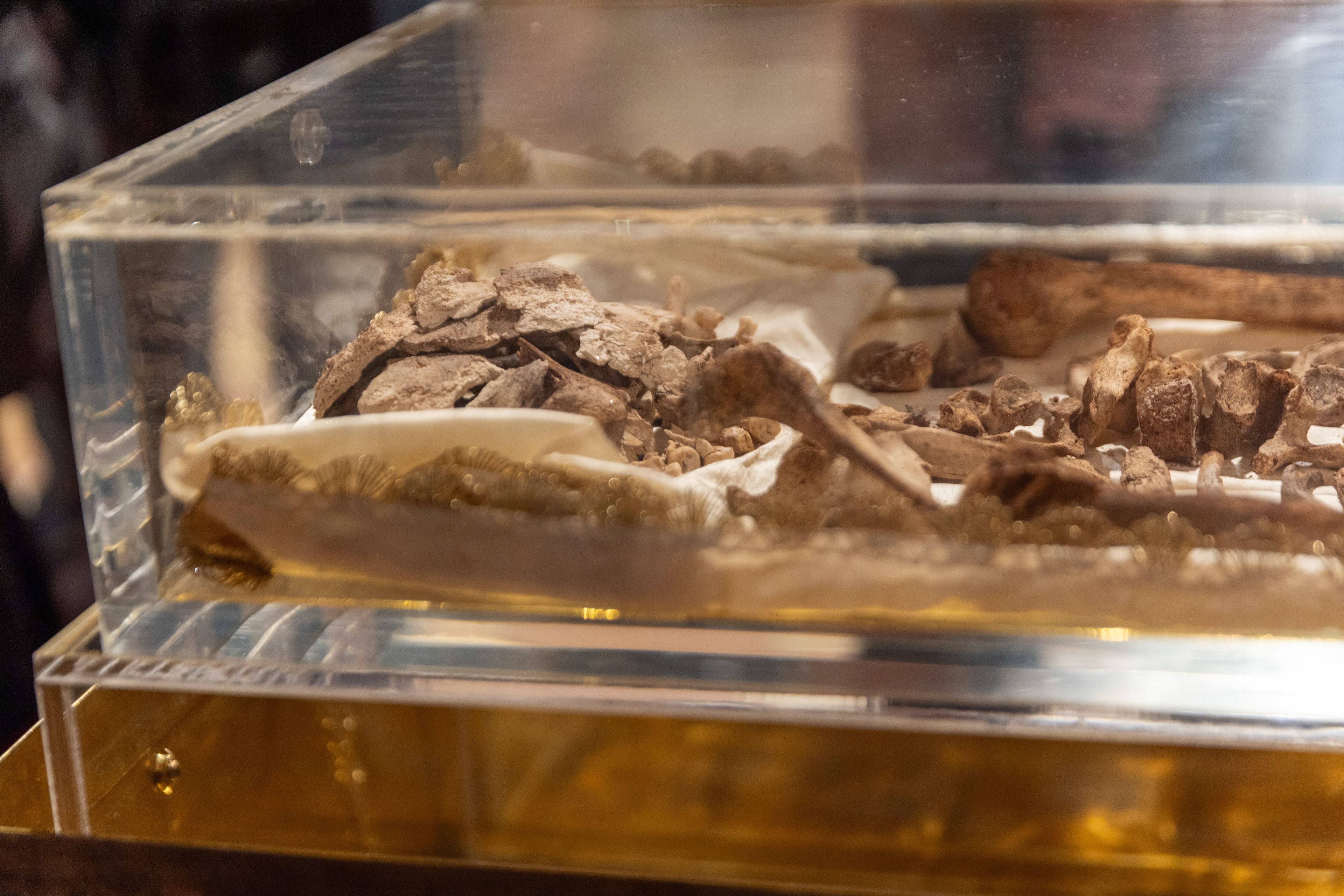
The bones of St. Francis are on display in Assisi, Italy, from Feb. 22 to March 22, 2026, for the 800th anniversary of the saint’s death. Credit: Daniel Ibanez/EWTN News.
‘Francis continues to speak’
The public veneration of St. Francis’ body has probably never happened before in history, the Franciscan friars who have organized the monthlong event told journalists the day before visits began. The extraordinary viewing has been the most highly anticipated part of celebrations marking the 800th anniversary of the death of the poor friar in 1226.
As of Feb. 21, 370,000 people had reserved a time slot, and while 80% of the registered pilgrims will travel from within Italy, the friars expect visitors from countries on five continents, including at least 5,000 people from the United States.
Over 400 lay volunteers and many Franciscan friars living in Assisi — heirs to the religious order founded by St. Francis — are involved in carrying out the ambitious project and related events throughout the month.
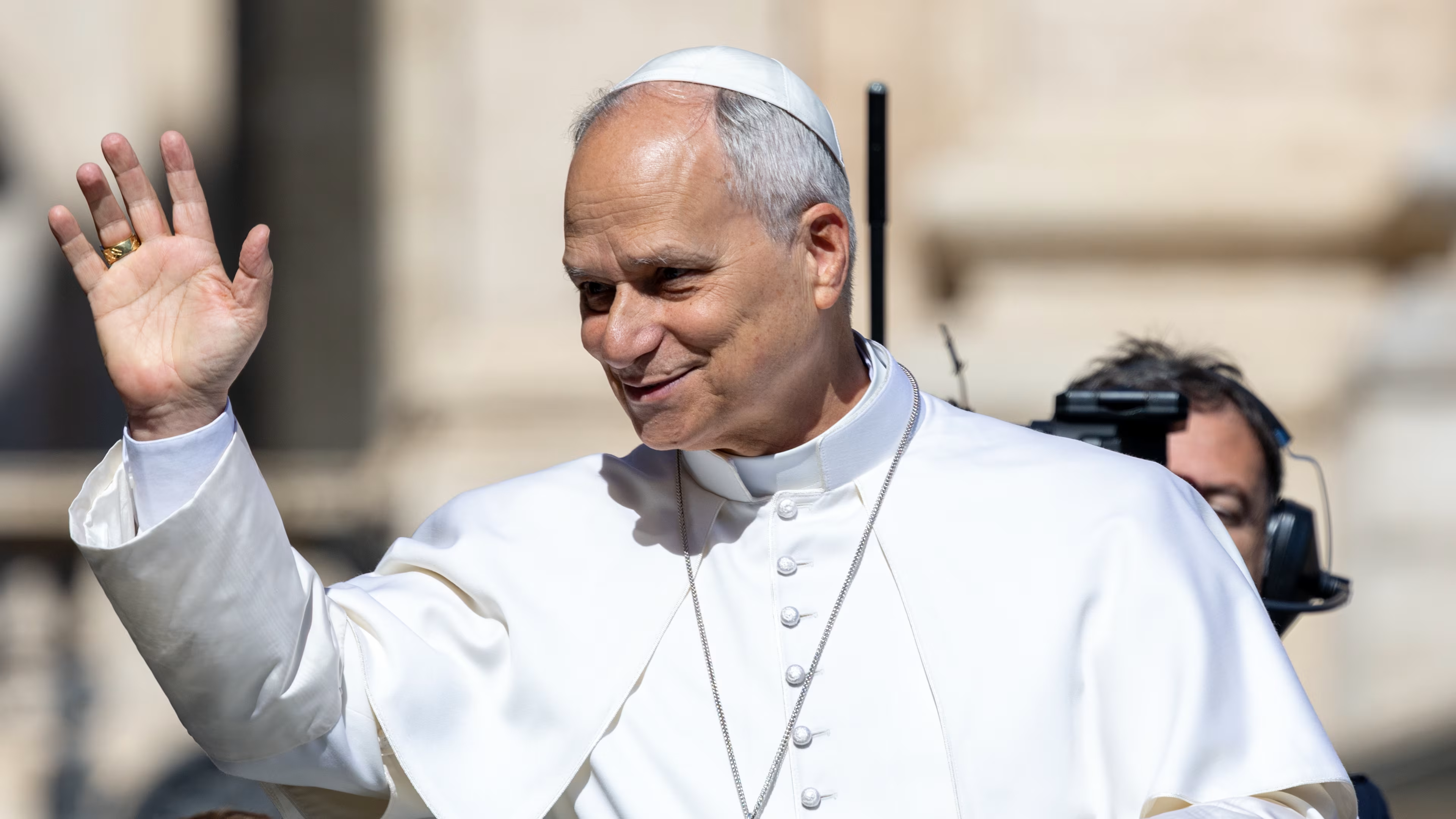
Assisi’s new Bishop Felice Accrocca, who will be formally installed March 25, said at the press conference that St. Francis, in life, was barely five feet and two inches tall: “He wore dirty clothes and his face was not beautiful, yet God gave great power to his words.”
“Francis continues to speak. I hope that this month will help us to reflect on this,” Accrocca said.
Pilgrims from across Italy described getting to pray before the exposed remains of St. Francis on Feb. 22 as very emotional and a huge joy. “We are very attached to him … He is our protector,” married couple Assunta and Salvatore from Frattamaggiore, on the outskirts of Naples, told EWTN News.
“We didn’t expect to be able to see him so close,” one Italian pilgrim told EWTN News. “To be able to touch [the plexiglass] … gives you a sense of absolute tranquility.”
Luciano Avino, a teen from the Naples-area, said, “Just getting close, almost touching the bones, was truly a unique moment … I’m sure I will never forget it.”
In an interview earlier this month with ACI Stampa, EWTN News’ Italian-language sister service, the bishop emeritus of Assisi, Domenico Sorrentino, explained why Christians venerate relics — pieces of the mortal remains — of saints such as Francis.
“Encountering those bones is a way of encountering the saint, but above all, a way of participating in his faith in the risen Jesus, in view of our eternal future,” Sorrentino said.
“Beyond the inevitably fleeting glance at those bones, it is important to welcome their message: In the Christian view of death, which Francis not coincidentally called ‘sister,’ even the remains of our bodies … continue to have meaning,” he added.
Veronica Giacometti contributed to this report.
The Author