



Book Review: Converts By Melanie McDonagh
From Oscar Wilde to Muriel Spark, Why So Many Became Catholic in the 20th Century
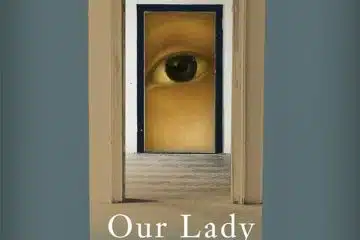
Converts: From Oscar Wilde to Muriel Spark, Why So Many Became Catholic in the 20th Century By Melanie McDonagh | Yale University Press | 368 Pages | $38
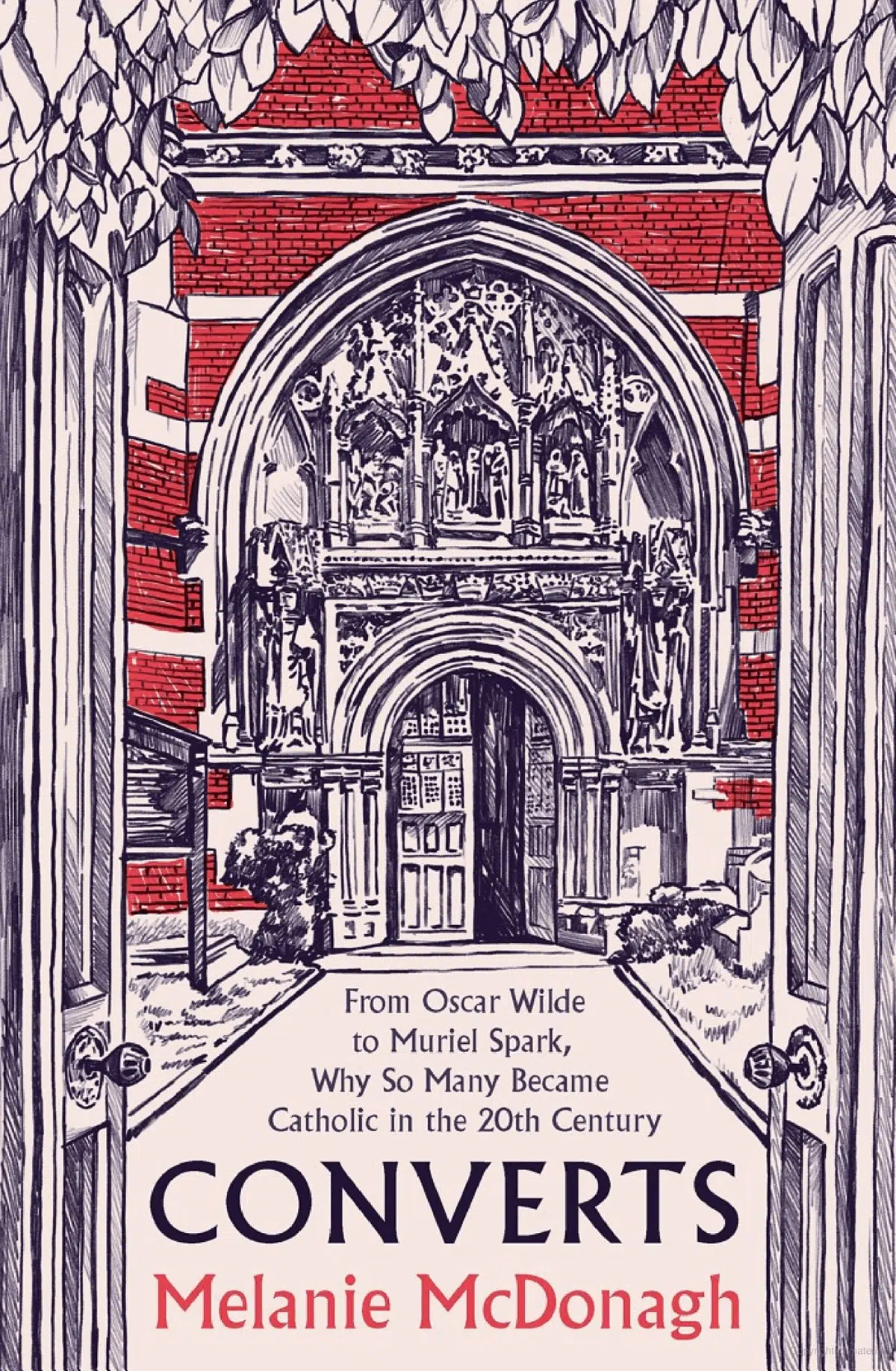 In England, the road to Rome runs through Birmingham. So might one conclude from reading Melanie McDonagh’s fascinating new book, Converts: From Oscar Wilde to Muriel Spark, Why So Many Became Catholic in the 20th Century. Birmingham, of course, was the long-time home of St. John Henry Newman and the city where he established the Birmingham Oratory and lived for the last 40 years of his life. Newman’s own conversion in 1845 sent shock waves not merely through his contemporary England but through the decades that followed.
As McDonagh describes it, Newman’s legacy is illustrated by an anecdote about priest and novelist R.H. Benson, the Catholic-convert son of an Anglican archbishop of Canterbury. When Fr. Benson asked another convert and friend what pushed him over the edge, the friend answered, “Newman, chiefly.” Benson replied, “Same with me; and I am sure the same answer would be given by ninety-nine out of a hundred educated converts.” Novelist and Catholic convert Muriel Spark echoed Fr. Benson, declaring that “it was by way of Newman that I turned Catholic.”
Of course, many English Catholic converts in the 20th century—probably a large majority—never read Newman or, perhaps, even heard of him. As McDonagh demonstrates, in the fifty years between 1910 and 1960, “well over half a million people in England and Wales became Catholic.” These were disproportionately concentrated in the inter-war periods, during times of unprecedented moral and political disillusion.
McDonagh accounts for this rise in conversions in England through a quote from novelist Graham Greene, who wrote to a friend, “One does want fearfully for something firm & hard & certain.” Greene’s observation could be a proxy for the cause of many other conversions catalogued in Converts. The stability, consistency, and rigor of Catholic theological and moral teaching are the solution to the moral crises of the first half of the twentieth century, which was consumed by two world wars and infected by a growing culture of nihilism.
McDonagh’s portraits of such famous converts as Benson, Spark, Greene, Evelyn Waugh, Oscar Wilde, and Elizabeth Anscombe beautifully illustrate the thesis. Running through all these conversions is a quest for truth that transcends time and space; politics and war; and national boundaries and personal demographics. While some converts she describes were less than constant in their own practice of the faith and others were crisis conversions near the end of their lives, the stability of the Church itself is what emerges from these profiles.
This is illustrated by the conversion of G.E.M. Anscombe, among the most famous analytic philosophers in the world. Strongly objecting to the bombing of Hiroshima and Nagasaki in 1945, Anscombe found the moral resources to articulate her objection in the Catholic faith, to which she had converted in April 1938. Being Catholic, said Anscombe, is not confined to “religious” expressions or commitments. Rather, “[I]t is at the same time a secular ambition: for secular affairs only find fulfilment in” Catholic truth.
Anscombe’s could be the attitude of many, if not nearly all, the converts portrayed in Converts. God is the God of all things, and Christ is the redeemer of all fallen good things. It is no surprise, then, that artists, novelists, poets, and playwrights have found the constancy of the Church—its promulgation of truth, beauty, and goodness—to be their proper home; not only in England in the 20th century, but for all nations, world without end. Melanie McDonagh’s Converts is an elegant portrait not only of converts but of the Church to which they converted.
The Author