

Sacred Heart Church, Dayton
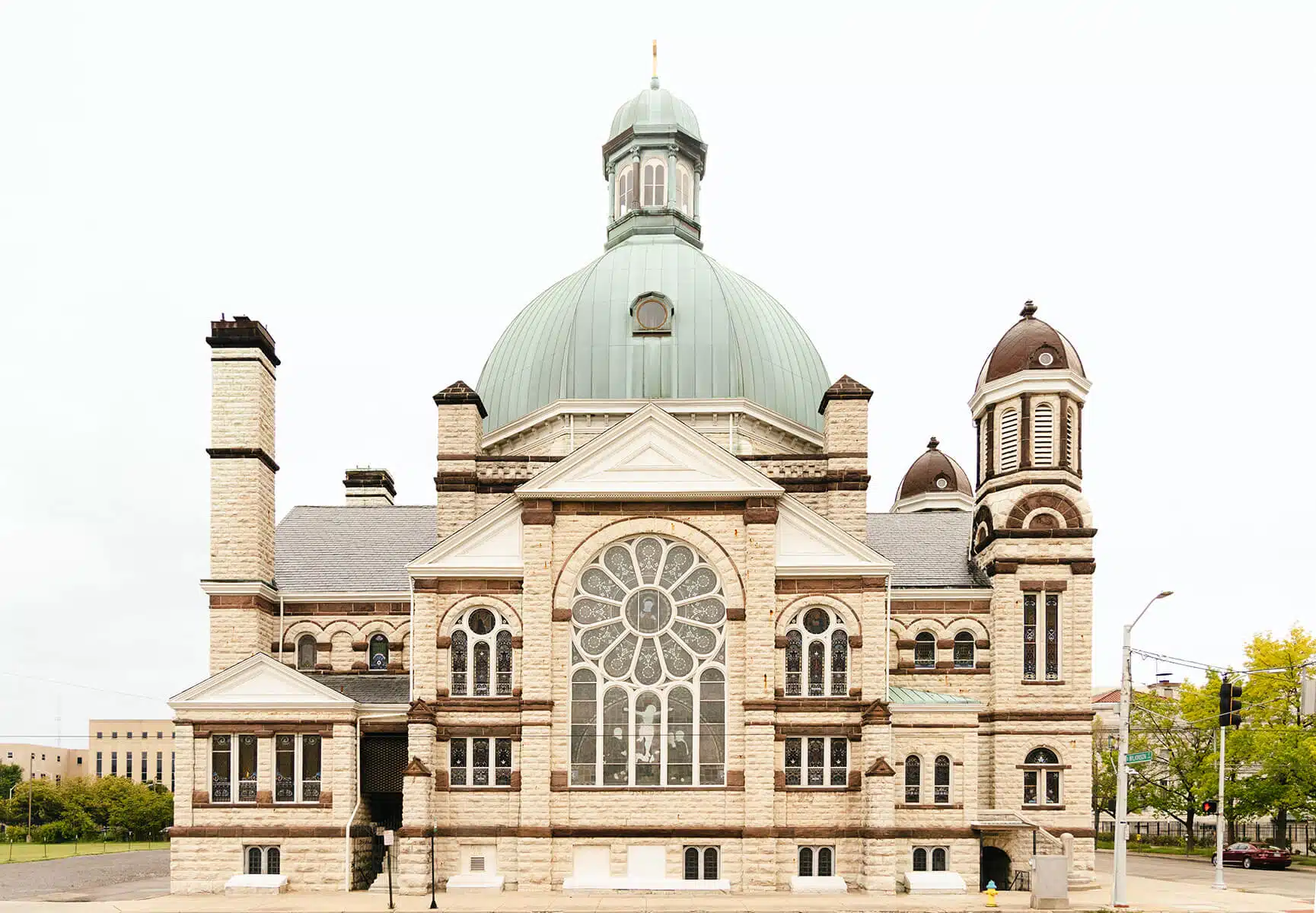 Sacred Heart Church in Dayton is home of the Dayton Vietnamese Catholic community and is served by the Congregation of the Mother of the Redeemer (CRM, called the Congregation of the Mother Co-Redemptrix until 2017), a religious order formed in Vietnam in the 1940s.
About half of the order’s members arrived in the United States as part of the “Boat People” refugees in the late 1970s and were invited by the bishop of Springfield-Cape Girardeau to purchase a former seminary in Carthage, Missouri, for $1. Approved in 1980 as the CRM’s Assumption Province, it provides priests for Vietnamese-speaking Catholics in several states, including Ohio, and holds an annual three-day festival, Marian Days, that is attended by tens of thousands.
Through the Years
1888
Sacred Heart Church was built between 1888, when Archbishop William Henry Elder laid the cornerstone, and 1895, when Covington Bishop Camillus Maes consecrated the building—though Masses were held in the basement from 1889 to 1893, when they moved to the sanctuary. It was the fourth Catholic church in Dayton, and the second created for English-speaking Irish Catholics.
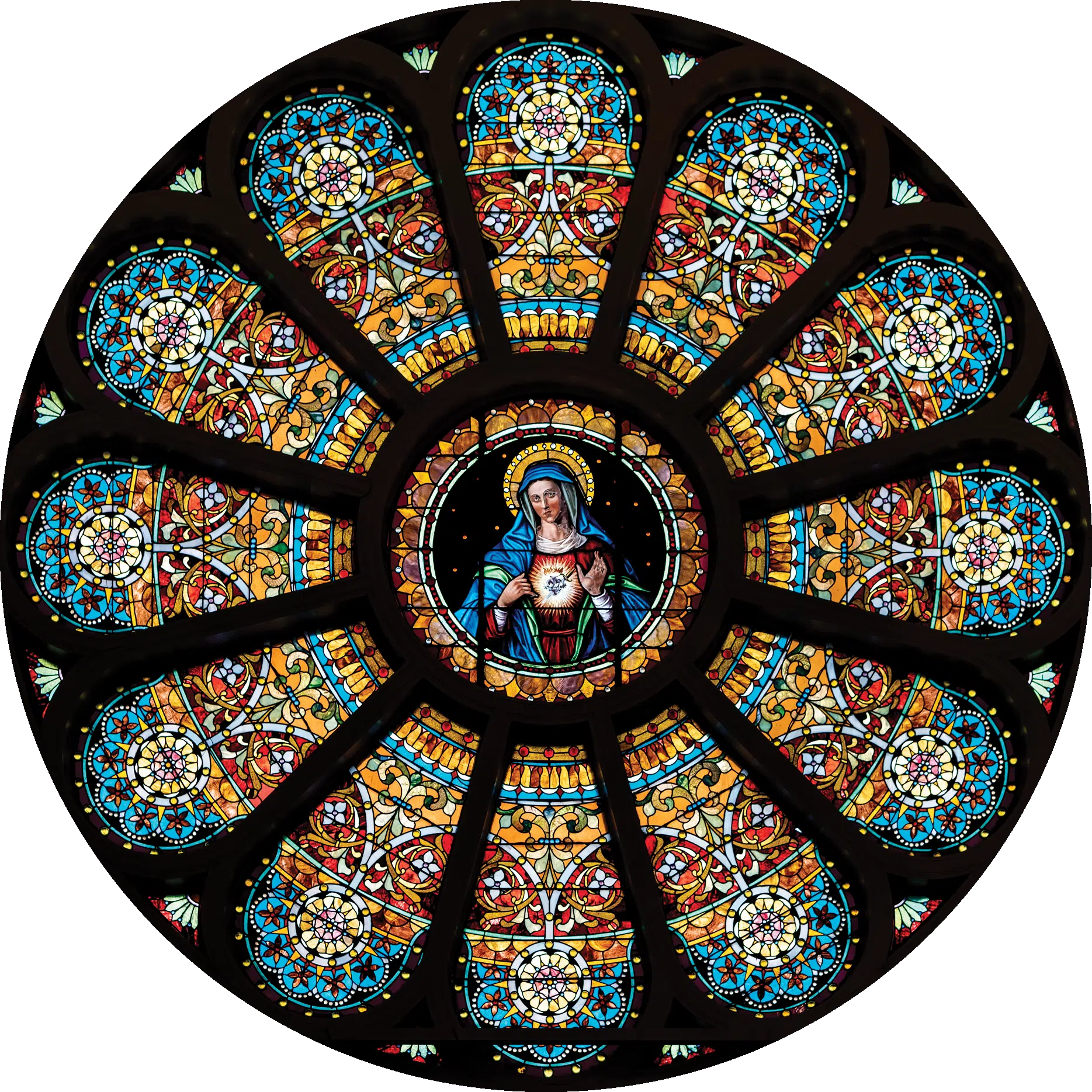
Its Richardsonian Romanesque revival structure with the massive, copper-covered Baroque dome cost $100,000 to build. Designed by Charles Insco Williams, and made of local limestone, with brown sandstone trim quarried from Berea, Ohio, its many exterior features include triangular pediments, two front towers, three cupolas, and multiple rose windows. Massive stained glass windows dominate the once ornate interior, which has undergone several extensive renovations. Donated by parish families, the windows cost more than $7,000.
1902
Cincinnati artist Charles Svendsen and G. Gloscio of Indianapolis painted the church interior in a Roman style—some of Svendsen’s paintings remain, including four in the dome, but Gloscio’s frescoes do not. The current, contemporary-style sanctuary features a back wall with colored panels that can be changed for the liturgical seasons.
1964-1996
The parish school built in 1902 was purchased and razed by the city in 1964, and the church’s interior was completely renovated in 1972 through a project designed by Cincinnati architect Albert V. Walters. By 1996, however, church attendance had dwindled and the parish closed. St. Vincent de Paul (SVDP) wanted the building as a retirement home for priests and religious, but the Dayton Vietnamese Catholic Community approached SVDP leaders about acquiring it after losing their previous home.
2000-Present
As Anthony Staub, who oversaw the church’s maintenance, toured a group from the Vietnamese Catholic Community through the building one day in 2000, the long-silenced electric bell began to ring. Taking it as a miraculous sign, he recommended turning the property over to them.
Thirty-five families worked for more than a year, and in 2002 Archbishop Daniel Pilarczyk reopened Nhà Tho’ Thánh Tâm —“Sacred Heart Church”— with a celebratory Mass and ceremony attended by Dayton officials, Vietnamese Catholics from around the region, and former parishioners. The archbishop cut the ribbon to the doors following a procession that included traditional Vietnamese music and a lion dance, and Dayton Mayor Rhine McLin rang the church’s massive bell—on purpose, this time.
The Author