

The Transcendentals and the Pursuit of True Happiness
 Aristotle said that the true end of all human endeavors is the quest for happiness itself. We can agree that all people seem to desire to be happy, but beyond that there’s not much else on which we agree.
If happiness is our destination, how do we know how to get there? Can happiness mean different things for different people?
Still buzzing from all the excitement around the recent 250th anniversary celebrations of the signing of the Declaration of Independence, I couldn’t help but note the question of happiness woven into the American experiment itself.
In the Declaration, the signers declared: “We hold these truths to be self-evident, that all men are created equal, that they are endowed by their Creator with certain unalienable Rights, that among these are Life, Liberty and the pursuit of Happiness.”
We have a fairly clear sense of what the Founders meant by “Life” and “Liberty,” but “the pursuit of Happiness” is less obvious.
I think it’s fair to say that they weren’t envisioning modern-day luxuries, technology, long vacations, or the notion that “I’m free to do whatever I want.” They were, after all, men who cherished hard work, knowledge, and virtue. They did not think of happiness in relativistic or narcissistic terms, but rather as something universal and real.
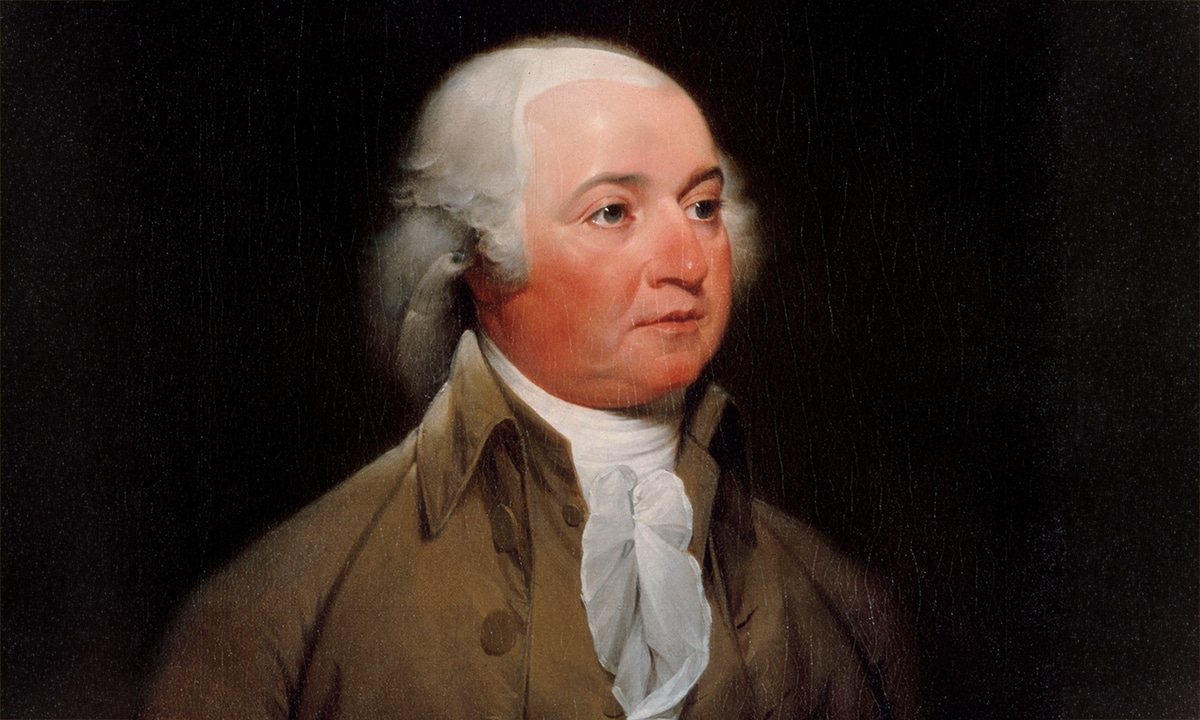
John Adams wrote a famous letter to his wife and children from Europe in 1780, during the American Revolutionary War, that provides a window to his vision of happiness. He had been away from his family for years. He missed them dearly, and they longed to be with him. In this letter, he attempted to explain why the sacrifices for independence were so important:
“I must study politics and war [so] that my sons may have liberty to study mathematics and philosophy. My sons ought to study mathematics, philosophy, geography, natural history, naval architecture, navigation, commerce, and agriculture in order to give their children a right to study painting, poetry, music, architecture, statuary, tapestry, and porcelain.”
Adams’ vision of freedom was never an end in itself. Liberty existed so that each generation could devote itself more fully to learning, culture and, ultimately, the cultivation of virtue.
There is something profound in that progression toward happiness that he envisioned for his family and, by extension, for his country and the whole world. His words reflect an understanding of freedom that resonates with the classical and Christian tradition. Human beings naturally seek the good, the true, and the beautiful—the transcendentals—which ultimately lead us to the Father through Christ.
I am grateful that my children live in a free country where they can receive a Catholic education. Freedom, however, is not self-directing. Children must be formed to recognize what is truly good. They will encounter countless temptations and competing visions of happiness, making the formation of conscience, virtue, and sound judgment all the more essential. This is one of the great gifts of Catholic education.
It is a true blessing that my children can receive the education that Adams imagined for his descendants. Once our basic needs are met and we have the freedom to pursue higher things, we naturally begin seeking beauty—in art, music, literature, architecture and, ultimately, in worship itself.
Whatever is beautiful in the culture has the potential to open us up to the source of all beauty, Christ—whose holiness and truth shine in a way that draws people into Himself.
For Catholics, the good, the true, and the beautiful are not only categories of philosophy; they also describe the Gospel’s way of reaching the human person through the beauty of Christ, the truth of God, and the goodness of divine love that orders life toward its end—happiness in eternity.
The Author