
Mutual Submission (Part Three)
Christian Anthropology | Andrew J. Sodergren, M.T.S., Psy.D.
Note: This article is part of an ongoing series on Pope St. John Paul II’s “Theology of the Body.”
We have been unpacking Pope St. John Paul II’s meditations of Ephesians 5, in which the late pope emphasizes the “mutual submission” of husband and wife out of reverence for Christ. The traditional term for this reverence is pietas, which connotes a holy fear, respect, and awe. The basic idea is that when I have an awareness of the presence of Christ dwelling in my spouse, it should move me to such profound reverence that I freely “submit” my desires, preference, even my very self to my spouse, seeking her good before my own.
All of this is well and good, but what of St. Paul’s admonition specifically to wives to be subject to their husbands as to the Lord (Eph 5:22)? According to John Paul II, the core of St. Paul’s teaching in Ephesians 5 is that “the community of the spouses” is “born on the foundation” of their “reciprocal submission” based on reverence (pietas) for Christ dwelling in each other (TOB, 89.6). In his view, “Love excludes every kind of submission by which the wife would become a servant or slave of the husband, an object of one-sided submission. Love makes the husband simultaneously subject to the wife, and subject in this to the Lord himself, as the wife is to the husband” (89.4).
For Pope St. John Paul II, mutual submission implies a shared reverence to Christ expressed in the love and conduct of both spouses toward each other. It is also a mutual renunciation of any inclination to dominate or control the other. To dominate one’s spouse violates that dignity of the person and Christian vocation of marriage. Rather, Christian spouses are called to model their love after that of Christ and the Church, in which the central dynamic is self-gift and receiving the other as gift. This entails placing the good of the other before one’s own good to the point of total self-sacrifice while also receiving, welcoming, and accepting the priceless gift of the other.
It is only in light of this understanding that we can accurately understand St. Paul’s image of the husband being “head” of the wife as Christ is “head” of the Church. To be “head” in this context means to lay down one’s life out of love for the other as Christ did. To be subject then means to lovingly receive the sacrificial self-gift of the other and respond reciprocally. This headship and subjection does NOT imply any domination of one spouse over the other. Rather, headship and submission mean giving and receiving love. The model of this love is Christ’s love for the Church, expressed through His total, salvific gift of self on the Cross. This is not just an ideal but the concrete calling of every Christian spouse
“Marriage corresponds to the vocation of Christians only when it mirrors the love that Christ, the Bridegroom, gives to the Church, his Bride and which the Church … seeks to give back to Christ in return. This is the redeeming, saving love, the love with which man has been loved by God from eternity in Christ. … Marriage corresponds to the vocation of Christians as spouses only when precisely that love is mirrored and realized in it” (90.2-3).
Having Christ as “the source” and “model” of their mutual submission ennobles the vocation of Christian spouses as a true path to holiness, conferring on the marital relationship “a deep and mature character” (89.4). According to Pope St. John Paul II, living this vocation of mutual submission out of reverence for Christ, opens spouses to a gradual psychological and moral transformation through the grace of their sacrament. As they grow ever more united in love, they simultaneously grow in transformative union with Christ dwelling in their midst. Such is the awesome gift of the sacrament of marriage.
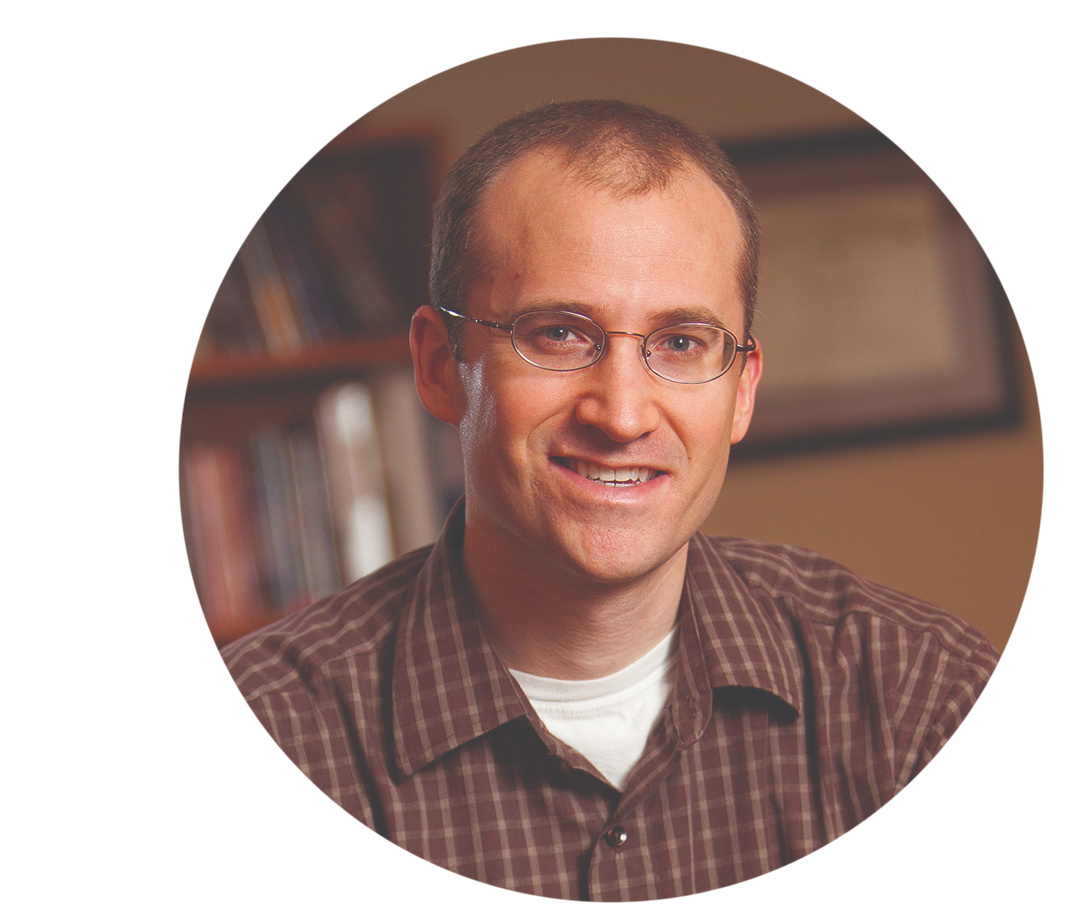 Dr. Andrew Sodergren is a Catholic psychologist and director of psychological services for Ruah Woods. He speaks on the integration of psychology and the Catholic faith. He and his wife, Ellie, have five children.
This article appeared in the March 2026 edition of The Catholic Telegraph Magazine. For your complimentary subscription, click here.
The Author