One Flesh
Christian Anthropology | Andrew J. Sodergren, M.T.S., Psy.D.
Note: This article is part of an ongoing series on Pope St. John Paul II’s “Theology of the Body” (TOB).
In his meditations on Ephesians 5, Pope St. John Paul II highlighted the two distinct images St. Paul uses to describe the relationship between Christ and the Church: bridegroom/bride and head/body. The first of these images emphasizes the analogy between Christian marriage and the relationship of Christ and the Church. The second image is similar but emphasizes to an even stronger degree the union of the two.
Strikingly, St. Paul applies this head/body image both to the relationship of Christ and the Church and to that of Christian spouses. He introduces the analogy by saying, “The husband is the head of the wife as Christ is the head of the church, his body,” and then goes on to exhort husbands:
Love your wives as Christ love the church and gave himself up for her, that he might sanctify her, having cleansed her by the washing of the water with the word, that he might present the church to himself in splendor, without spot or wrinkle or any such thing , that she might be holy and without blemish. Even so, husbands should love their wives as their own bodies. He who loves his wife loves himself. For no man ever hates his own flesh, but nourishes and cherishes it, as Christ does the church, because we are members of his body (Eph 5:23-30).
As we have seen previously, Pope St. John Paul II did not see in this head/body relationship any room for the domination of one spouse over the other. Rather, he repeatedly reaffirmed the equal dignity of man and woman and their call to mutual submission. Using the theological principle of analogy, he understood St. Paul to be highlighting the unity between Christ and the Church and the calling of Christian spouses to reflect that unity in marriage. He reflected on how the head/body image speaks of “an organic union” as if the two form a single organism (TOB 91.2).
In marriage, husband and wife remain two distinct persons, but through their mutual self-gift and receiving each other in love, they form such a profound union that Scripture refers to them as “one flesh” (Gn 2:24; Eph 5:31). According to the late pope, “It is a question of unity, not in the ontological, but in the moral sense: of unity through love” (92.5).
What does it mean for a husband to love his wife as his own body (and vice versa)? Pope St. John Paul II highlighted that the body is the expression and foundation of the personal “I.” Therefore, Christian spouses are called to a unity that includes the body but goes beyond mere physical intimacy to a communion of persons. “This is the moral unity conditioned and constituted by love. Love not only unites the two subjects, but allows them to interpenetrate each other, belonging spiritually to one another.” Indeed, “the ‘I’ becomes in some way the ‘you,’ and the ‘you’ the ‘I’” (92.7).
The key to understanding this lies in St. Paul’s language of “nourishing” and “cherishing” quoted above. While applying first and foremost to Christ’s ongoing work of sanctifying the Church through the sacraments, Pope St. John Paul II also saw in these words a “specific character of conjugal love, especially of the love by which the spouses become ‘one flesh’” (92.8). He wrote, “In union through love, the body ‘of the other’ becomes ‘one’s own’ in the sense that one is moved by concern for the good of the body of the other as for one’s own” (92.7).
Since the body is in a sense the “sacrament” of the person, “nourishing” and “cherishing” it means a committed, sacrificial pursuing of the holistic good of the other as intensely as for oneself and excludes any sense of “possessing” the other’s body as an object. These words from Ephesians thus “speak above all with the language of ‘agape’” (92.7). When the hearts of both spouses are wholly and mutually committed to this pursuit, they can fittingly be said to have become “one flesh.”
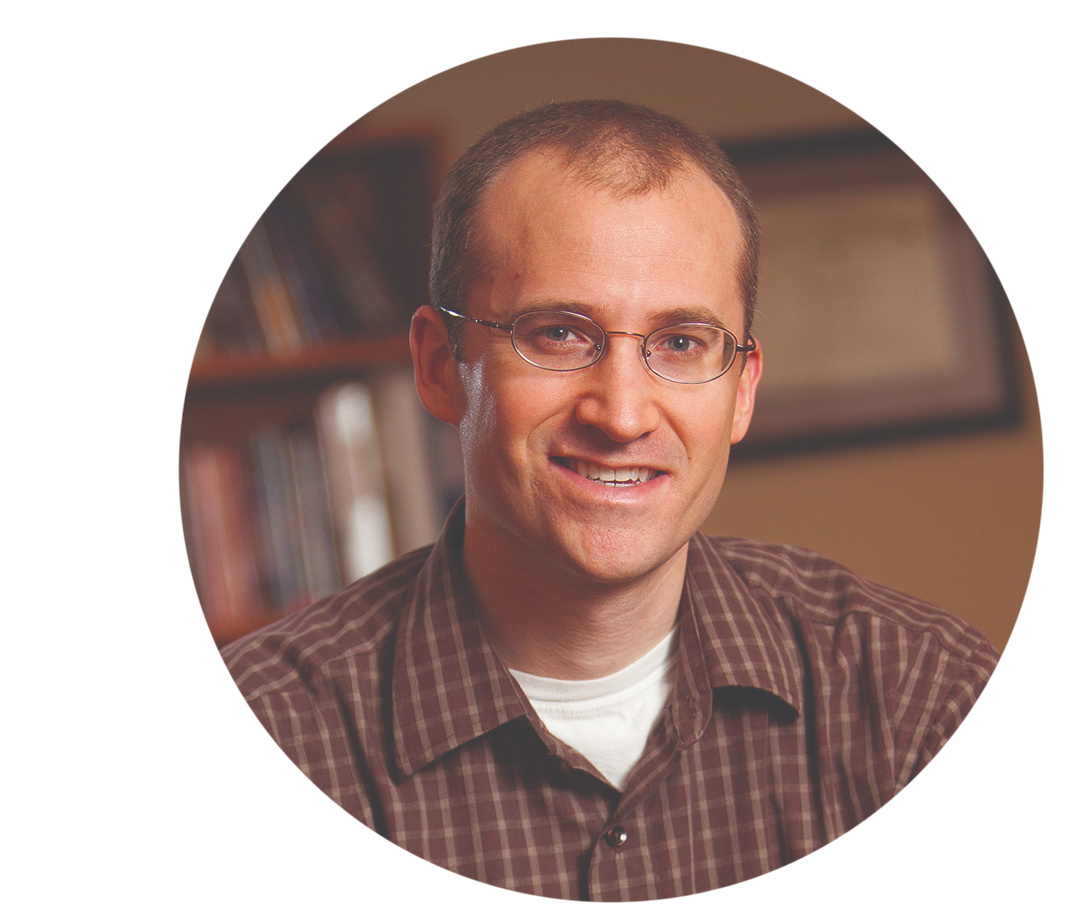 Dr Andrew Sodergren is a Catholic psychologist and director of psychological services for Ruah Woods. He speaks on the integration of psychology and the Catholic faith. He and his wife Ellie have five children.
This article appeared in the April 2026 edition of The Catholic Telegraph Magazine. For your complimentary subscription, click here.
The Author