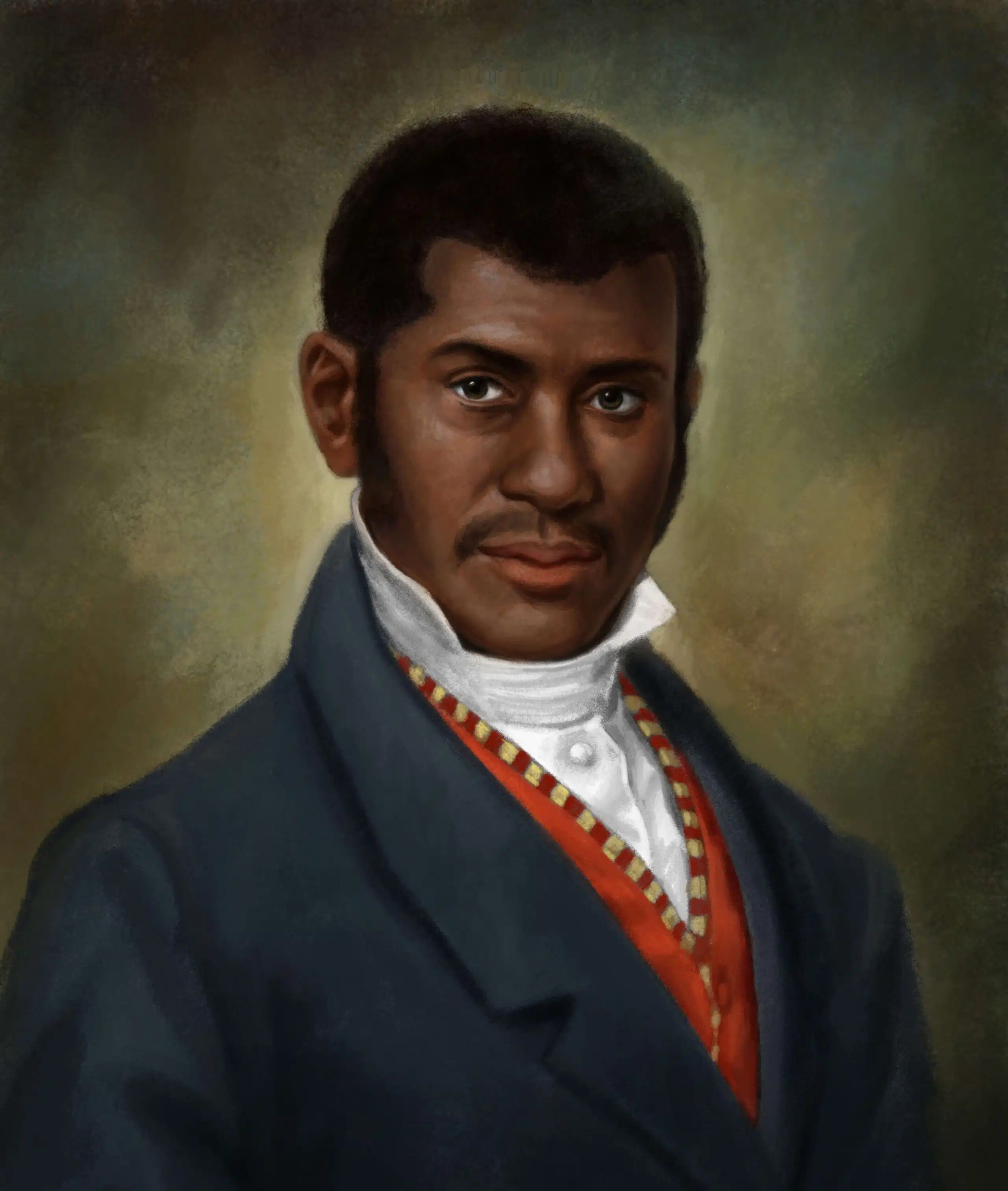
Venerable Pierre Toussaint
A Life of Charity and Courage
by Mary Anne Bressler
The Saintly Seven
Were you aware that there are seven African American candidates for canonization? The lives of these holy men and women span nearly the entire existence of the United States as an independent nation—from Pierre Toussaint, born in 1766, through Thea Bowman, who died in 1990. It will be a truly thrilling day when we celebrate the canonization of the first African American saint!
Three of the individuals (Julia Greeley, Friar Martin De Porres Maria Ward, and Sr. Thea Bowman) are Servants of God, the first step on the journey to canonization. To receive a Servant of God designation, the bishop of the diocese in which the individual lived begins a consultation into their life, no sooner than five years after their death. When the bishop receives a nihil obstat (“nothing stands in the way”) from the Holy See, the bishop forms a tribunal that is charged with investigating the person’s life. At this point, the candidate is called Servant of God.
The other four candidates (Pierre Toussaint, Mother Mary Lange, Henriette Delille, Fr. Augustus Tolton) have achieved the next designation, “Venerable.” Their causes have reached the Congregation for the Causes of Saints, and nine theologians have judged that their lives were heroic. The pope at the time approved the judgment, and thereby, these four were declared Venerable. They will be beatified after a miracle is attributed to their intercession, elevating them to “Blessed” status. Finally, after another miracle, canonization will take place and the person will receive the title of “Saint.”
Local Events to Honor Saintly Seven
To grow awareness about the lives of the “Saintly Seven” during the coming months, the Archdiocesan Anti-Racism Task Force is organizing seven sessions throughout the archdiocese to talk about their lives, their causes for canonization, and the experience of black Catholics in this nation. The sessions will be live-streamed to enable everyone to join in the conversation and reflection, with corresponding features about the month’s presented candidate appearing in The Catholic Telegraph . The series concludes after eight months, in November, Black Catholic History Month—reminding us that a single month is not sufficient to honor the contributions Black Catholics have made to our Church and our nation since before its founding. We begin this series with the story of Pierre Toussaint.
Venerable Pierre Toussaint
Venerable Pierre Toussaint (1766-1853), the first born of the seven African American Catholic candidates for canonization, led a truly remarkable life. Born into slavery, Toussaint’s enslaver, Pierre Bérard, brought him from Haiti to New York City during a time of political unrest that eventually led to the Haitian Revolution. Apprenticed with a hairdresser, Pierre became much in demand among the city’s wealthy women because of his skill, amassing great wealth over his lifetime. After Bérard died, Toussaint supported Bérard’s widow, her second husband, and the other enslaved persons in the household. Marie Bérard freed him from bondage upon her death in 1807. Four years later, he married Juliette Noel (whose freedom he purchased, along with his sister’s), and they adopted his orphaned niece Euphémie.
A devoted Catholic, Toussaint attended daily Mass at St. Peter’s Church in New York City. He and Marie gave generously of both their time and talent—supporting charities, sheltering orphans, fostering several children, and nursing persons suffering from yellow fever. His philanthropy was outstanding. In spite of his wealth, he continued working so he could support those in need. Among his remarkable acts of generosity: he was a key fundraiser for St. Patrick’s Cathedral, the first Catholic orphanage, and the first school for black children in New York. He also organized a credit bureau, an employment agency, and a refuge for priests and needy travelers. Toussaint is credited with founding Catholic Charities of New York.
In 1983, the Pierre Toussaint Scholarship Fund (PTSF) was established to help high school seniors of diverse backgrounds attend college. In addition to financial support, the PTSF provides spiritual and practical mentorship to its recipients. A key component of being a scholar is active involvement in parish, campus, and neighborhood communities.
The path to canonization began for Toussaint in 1968 when Cardinal John O’Connor gave Toussaint the title of Servant of God. His body was then exhumed and moved to St. Patrick’s Cathedral for burial under the crypt, the only layperson so honored. In 1997, Toussaint was declared Venerable by Pope St. John Paul II. Once a miracle is attributed to his intercession, he will be elevated to Blessed. A second miracle would complete the process of canonization.
Toussaint has much to teach us about love, compassion, generosity, and unwavering faith in God. Let us pray that his cause may move forward so that all people may recognize his holiness.
Mary Anne Bressler is the Parish & Community Engagement Coordinator at Catholic Charities Southwestern Ohio.
The Author