




Forensic Aspects of the Passion of Christ
by Deacon Michael Trimpe
In my career as a forensic scientist at the Hamilton County Coroner’s Crime Laboratory, I often thought of the pain and suffering our Lord Jesus Christ experienced during His Passion. We know His manner of death was authorized by Pontius Pilate to be crucifixion. But what would His cause of death be in medical terms? Now a deacon at St. Peter in Chains, I assembled a PowerPoint presentation depicting His Passion to help us reflect on just how much He loves us. People often ask, “How is it that a forensic scientist is a deacon?” My answer is, “I am always seeking the truth!”
As we enter Lent’s final days, let us prayerfully meditate on what He experienced from a medical perspective, so we can better appreciate His love.
In the Garden of Gethsemane, Jesus sweated blood. Hematidrosis is a condition that occurs when the blood vessels that feed sweat glands rupture because of extreme physical or emotional stress. He probably “fell” to the ground in agony in the garden because of this extreme, stressful condition. Can you imagine knowing the torture that was about to happen and praying, “God’s will be done”? Can we stay with Jesus in this moment… and pray for Him… and pray with Him?
During a scourging, the victim’s arms were fastened high so that the Roman flagrum (a type of whip) could wrap around and hit both the victim’s back and front. It had three leather tails with metal, dumbbell-shaped weights on the end. These broke the blood vessels at the flesh and left cuts and welts on the skin. They could also bruise and collapse the lungs, making it difficult to breathe and leading to an “early” death on the cross.
Under Mosaic Law no one was allowed to receive more than 40 lashes, so the maximum number of lashes given by the Romans to the worst criminals was 39—which Jesus received. The Romans gave Jesus this worst scourging because they hoped they wouldn’t have to crucify Him.
The nerve supply to the head is so dense and especially sensitive, any prick causes severe pain. The crown of thorns pressed on Jesus’ head would have caused trigeminal neuralgia, which is known as the worst pain man can feel: walking, falling, sweating, and even wind would cause excruciating pain.
So, Pilate brings Jesus before the people— bloody, beaten, and barely able to stand— counting on the people to say it is enough and let Him go. But they still say, “Crucify Him.” As a result, the whole Passion of Christ ended up being the worst torture a human could be given—and it was for our sins!
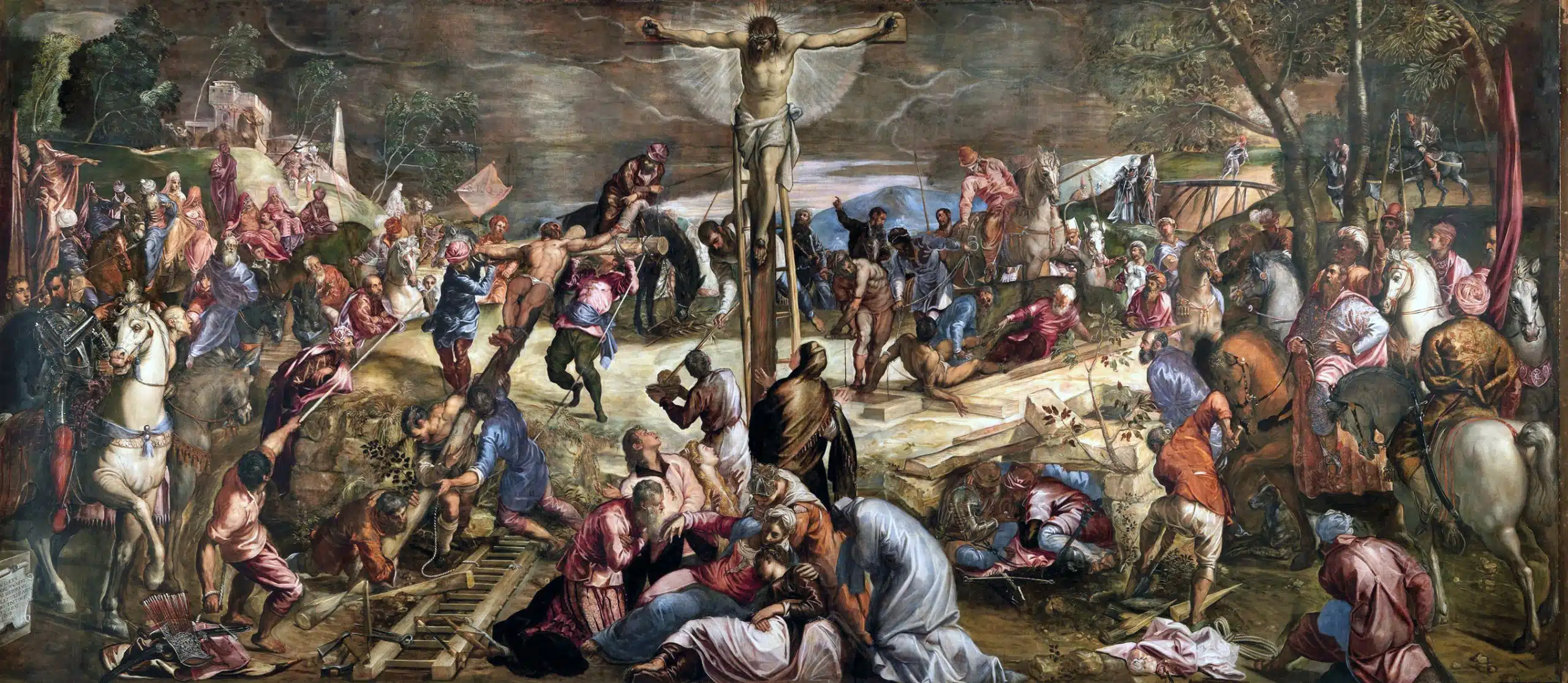
Jesus probably carried “only” the crossbeam, weighing 50-60 pounds, as the whole cross would have weighed 175-200 pounds; too heavy for a scourged man to carry. He then walked about a half mile to Calvary, over uneven, rocky ground that added to His pain. He undoubtedly would have fallen several times from exhaustion. Our Lord was hated so much and yet He loved us so much!
The annals of Clairvaux relate that St. Bernard asked Our Lord which was His greatest unrecorded suffering, and Our Lord answered: “I had on My Shoulder, while I bore My Cross on the Way of Sorrows, a grievous Wound, which was more painful than the others and which is not recorded by men. Honor this Wound with thy devotion and I will grant thee whatsoever thou dost ask through Its virtue and merit. And in regard to all those who shall venerate this Wound, I will remit to them all their venial sins and will no longer remember their mortal sins.” Both Padre Pio and Bernard of Clairvaux said the wound that was more painful than all others was the wound on the right shoulder. Could it be that the weight of our sins is the hardest to bear?!
At the Cross, stripping away Jesus’ clothing, now bound to wounds by clotted blood, would have caused great pain. The crucifixion nails, probably six inches long, were often dirty and reused. Romans actually nailed hands in the lower-palm to upper-wrist areas to hold the victim’s weight. They hit the median nerve, causing a most painful and burning sensation. Even gentle contact after exposing this nerve is torture, and a day’s noon heat would intensify this.
Can you see that every detail of Our Lord’s Passion was the absolute worst condition it could have been? The time of day, the terrain, the number of lashes, the nerves struck, etc.
Lord—why did it have to be soooo painful? Forgive me as you forgave those who tortured you!
Again, nailing the feet to the beam would hit a sensitive nerve—the plantar nerve—causing a similar pain to the median nerve. Each foot was probably nailed flat against His Cross, and there is no evidence of foot support. This caused numbness in the legs that would have caused Him to arch His body.
From all of this, then, Jesus’ medical cause of death was cardiac and respiratory arrest, due to hypovolemic (lack of blood and fluids) and traumatic shock that were due to crucifixion. We cannot imagine the pain He suffered.
How can an innocent man willingly accept such torture while praying for His torturers? He felt all the pain of a man but loved like only God can love. “This is my commandment: love one another as I love you. No one has greater love than this, to lay down one’s life for one’s friends” (Jn 15:12-13).
Lord, I am sorry for my sins. Thank You for Your love.
Deacon Michael Trimpe is a forensic scientist at the Hamilton County Coroner’s Crime Laboratory. He and his wife Giovanna are parishioners at the Cathedral Basilica of St. Peter in Chains, where he serves as a deacon.
This article appeared in the April 2026 edition of The Catholic Telegraph Magazine. For your complimentary subscription, click here.
The Author