

The Ancient Providers and Protectors of God’s Family
Church Fathers | Fr. Jacob Lindle
On July 17, 180 A.D., in the little town of Scillium in the Roman Province of North Africa, a Roman governor demanded that 12 Christians “swear by the spirit of our lord the emperor and offer sacrifice for his health.” These men and women recognized Ceasar’s earthly authority by paying taxes, but they only recognized one Lord of the universe worthy of worship. “I am a Christian,” they repeated, “What I am is exactly what I want to be.” Here is how their trial ended:
Saturninus the governor read aloud the sentence from a tablet: “Concerning Speratus, Nartzalus, Cittinus, Donata, Vestia, Secunda and the others who have confessed that they live according to the Christian religion: because in spite of the opportunity given to them to return to the Roman way of life, they have stubbornly persisted in maintaining theirs, I have decided that they be put to the sword.”
Speratus said: “We offer thanks to God.”
Nartzalus said: “Today we are martyrs in heaven. Thanks be to God.”
This is the earliest record we have of Christianity in North Africa (and also the earliest use of Latin by Christians!). These African Christians knew who they were and whom they served. They had a faith worth living for and one worth dying for. This month, we follow these Christians to North Africa as we look to Tertullian and St. Cyprian, men who struggled to articulate the identity that the martyrs felt in their bones. Looking back, we see that both men erred to varying degrees, but their theological work was nonetheless crucial for understanding who we are as Christians.
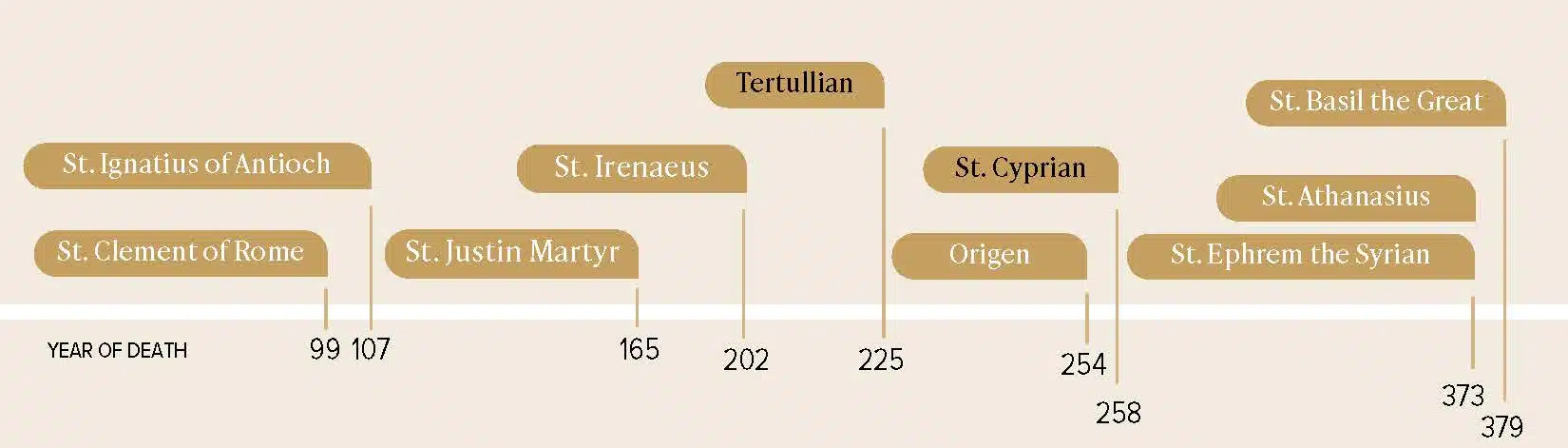
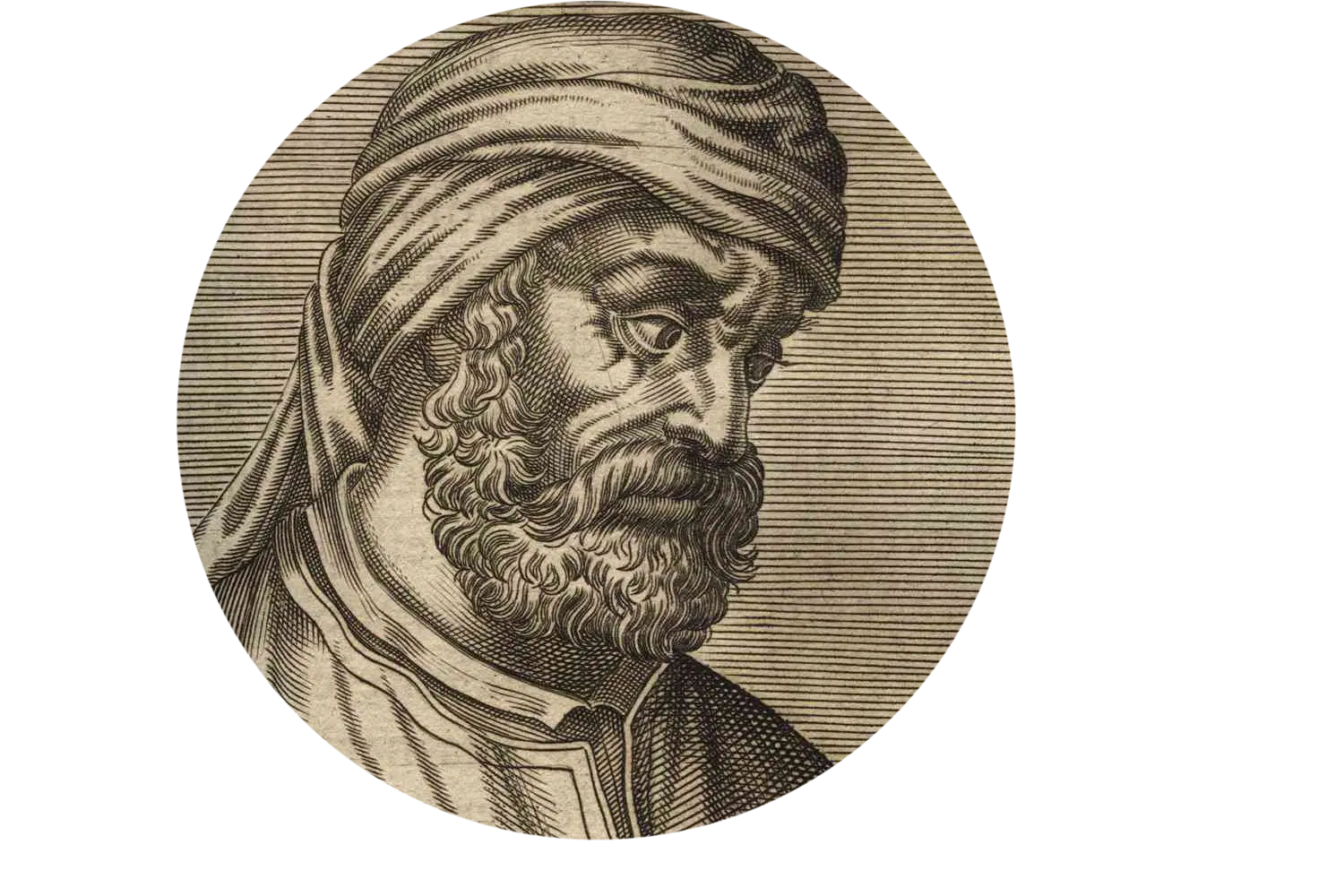 Tertullian lived from 160 to 225 A.D. in Carthage. It is estimated that when he began to write, less than 5% of North Africans were Christians. Most followed other gods, who were worshipped at games and festivals. The Christians stood out in this society like a sore thumb; they claimed that only Jesus was Lord, not Caesar, and that only one God was worthy of worship. Thus, at various times, the Romans sought to suppress this ragtag crew of Jesus’ disciples.
Tertullian famously responded to the persecution: “Your cruelty serves no purpose. On the contrary, for our community, it is an invitation. We multiply every time one of us is mowed down. The blood of Christians is an effective seed” (Apology, 50). Unlike imperial Rome which spread by killing others, Christianity paradoxically spread by being killed. The blood of the martyrs is the seed of the Church.
Tertullian is remembered for his fiery rhetoric in defending the faith and being the first to articulate the doctrine of the Trinity in Latin (“one substance, three persons”), but you might have noticed the lack of “St.” before his name. He is one of the most important Christian writers, but he isn’t technically a Father of the Church because of problems in his later writings.
Tertullian was a genius, but he was also a rigorist. Although many courageous souls died for Jesus, some did not; they apostatized and offered worship to the emperor. Tertullian argued that those who denied Christ could not be readmitted into communion with the Church. This led him increasingly under the influence of a sect of Christianity called Montanism, a charismatic movement that separated the institutional and hierarchical Church from the true and pure spiritual Church. Tertullian thought he knew better than the visible Church founded upon bishops and filled with sinners.
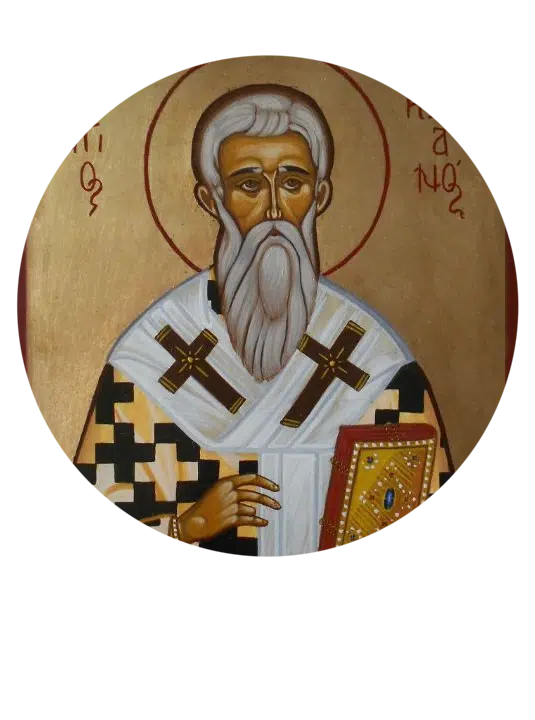 St. Cyprian, however, kept the institution and the Spirit together. He also lived in Carthage from 200 to 258 A.D. Although he called Tertullian his master, the student surpassed the teacher in his fidelity to Christ in the Church, to his death. Like Tertullian, Cyprian was a convert who saw his baptism as the most important moment of his life. In baptism, one becomes a child of God set apart for heaven, but Cyprian also realized that Christianity wasn’t an individual affair. He wrote, “No one can have God as Father who does not have the Church as mother” (The Unity of the Church, 6).
Christianity is not just about me and Jesus. The Church is God’s chosen instrument to gather all nations together into one body to worship the one Lord. This one body is filled with the one Spirit, and this is why Cyprian writes that “outside the Church, there is no salvation” (Epistles 4.4, 73.21). This statement is not meant to limit God’s salvific power but to show us where we can find salvation with certainty. Whereas Tertullian divided the visible and the invisible Church, Cyprian kept them together. We find salvation in the Church founded by Jesus upon Peter: “If a man deserts the Chair of Peter upon whom the Church was built, does he think that he is in the Church?” (The Unity of the Church, 4).
At the end of his life, Cyprian struggled to submit to Pope St. Stephen because of a disagreement about the efficacy of baptism by heretics. Cyprian was wrong, and the pope was right, but both were ultimately united in martyrdom. So, you don’t always have to be correct to be a saint. Instead, St. Cyprian teaches that sainthood is achieved by remembering who you are: God is your Father; the Church is your Mother; your pastor, bishop, and pope are your shepherds; Jesus is your Lord: live for Him and be willing to die for Him.
Fr. Jacob Lindle was ordained a priest for the Archdiocese of Cincinnati in May 2022. He is presently studying for a Doctorate in Patristic Theology at the Pontifical Gregorian University in Rome.
This article appeared in the April 2026 edition of The Catholic Telegraph Magazine. For your complimentary subscription, click here.
For further reading:
Tertullian, Apology in Tertullian: Apologetical Works and Minucius Felix: Octavius, The Fathers of the Church, vol. 10 (Catholic University of America Press, 1950).
St. Cyprian, The Unity of the Church in Saint Cyprian: Treatises, The Fathers of the Church, vol. 36 (Catholic University of America Press, 1958).
Joseph Ratzinger, Called to Communion: Understanding the Church Today (Ignatius Press, 1996).
Henri de Lubac, Catholicism: Christ and the Common Destiny of Man (Ignatius Press, 1988).
James K Lee, The Church in the Latin Fathers: Unity in Charity (Lexington Books, 2020).
The Author