
A Priest Forever
A CLOSER LOOK | Dr. Kenneth Craycraft
For most people who are anticipating graduation, the commencement ceremony is the pinnacle of an academic career. Whether from high school, college, or graduate school, May or June graduation is the completion of the objective. While, of course, high school and university graduates may be going on for more study, receiving that degree is still the fulfilment of the immediate task. It’s the final event and, thus, the time for celebrating the culmination of the mission. It is closure.
This is not the case, however, for the 17 men who will receive their professional degrees from Mount St. Mary’s Seminary (MTSM) on May 9.
Graduation is the Appetizer
While other graduates—including some lay people receiving MTSM degrees—may have blow-out celebrations befitting the completion of their work, the celebration of seminary graduates will be somewhat muted. That’s because receiving their degrees is not closure. It is not the culmination of their seminary education. It is, rather, the penultimate event—merely an appetizer for something much bigger later in May.
This is not to diminish the accomplishment that will be celebrated at graduation. These men have completed as many as six years of seminary formation and education beyond their college careers. This includes at least two years of formation and “pre-theology” philosophical work, followed by four years of theological education for the Master of Divinity degree (M.Div.), the professional degree that each of these 17 men will receive. Because of formation commitments in addition to academic responsibilities, these four M.Div. years are more intensive than a typical graduate or professional program. Some men will also be awarded a Master of Arts degree, having completed a thesis and other requirements for the additional honor. Still, this is only the appetizer. The feast is yet to come!
A Priest Forever
Of course, you know what the feast is. While the M.Div. is the prerequisite, it is still only the means toward the ultimate goal of ordination as a Catholic priest. Thus, on May 16 nine men will be ordained as priests for the Archdiocese of Cincinnati and eight will be ordained for the Diocese of Charlotte, North Carolina, two weeks later on May 30. When these 17 men are ordained, they will begin their participation in the eternal priesthood of Christ, re-presenting to us the very Incarnation of grace by which God became man.
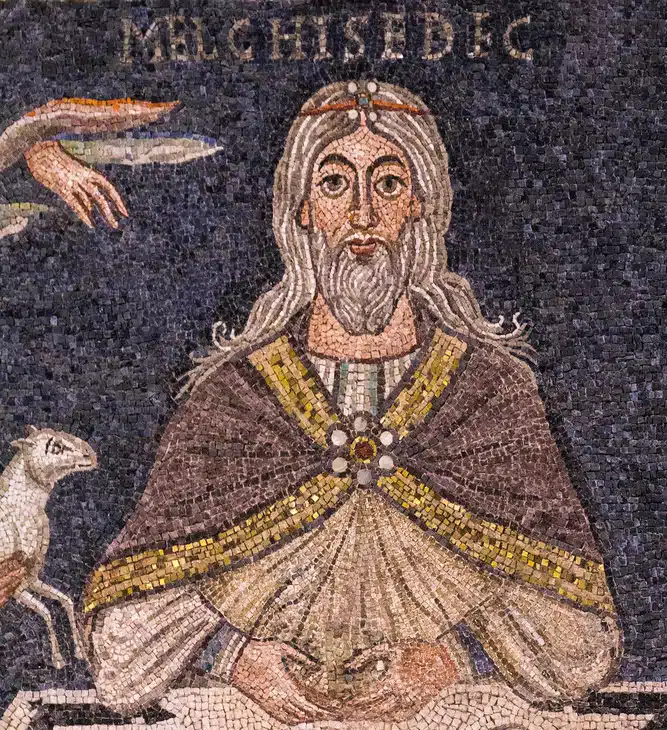
In the Epistle to the Hebrews, the biblical author explains that Jesus is (among lots of other things) the culmination of the Jewish priesthood. “You are a priest forever, according to the order of Melchizedek,” says Hebrews 5:6, invoking a mysterious but important Old Testament figure.
Melchizedek, Hebrews 7:3 explains, “is without father or mother or genealogy, and has neither beginning of days nor end of life, but resembling the Son of God he continues a priest forever.” Of course, we do not take that literally but rather as a symbol of the eternal priesthood of Christ. The point is that we have no information about Melchizedek apart from his blessing of Abraham offering him a tithe in Genesis 14:19-20. And thus, for the purposes of the Genesis narrative, Melchizedek has no beginning or end. His priesthood is metaphorically eternal. And he becomes the symbol of the actual eternal priesthood of Christ.
“This makes Jesus the surety of a better covenant,” the author of Hebrews further explains in Hebrews 7:22. “He holds the priesthood permanently, because he continues forever” (Heb 7:24). The sacrifice that he offered was “for all time a single sacrifice for sins” (Heb 10:12). Perpetuating this one eternal sacrifice through its re-presentation in the Mass is what the 17 ordinands in the Mount St. Mary’s Seminary class of 2026 have been preparing for. Ordination, not graduation, is the pinnacle of their careers at MTSM. And they are being ordained into a participation in the eternal priesthood of Christ.
Having taught each of these 17 men in multiple courses, I can attest that they are intellectually, morally, and spiritually well prepared for the vocations they have accepted.
For the Diocese of Charlotte: Deacons Robert Bauman, Michael Camilleri, John Cuppett, Maximilian Frei, Bryan Ilagor, Michael Lugo, Peter Townsend, and James Tweed will be ordained by Bishop Michael Martin on May 30, 2026. Their number is indicative of the growth of Catholicism in North Carolina, especially the Charlotte area. They are joining similarly large cohorts from the past several years and will be serving a thriving Catholic community in their diocese. They are very well prepared to meet the demands of a growing, spiritually vibrant Catholic community.
The nine men to be ordained for the Archdiocese of Cincinnati represent a similar encouraging trend of relatively large ordination classes. On May 16, Archbishop Robert Casey will lay hands on Deacons Nicholas Emmerling, Curtis Gross, Kraig Gruss, David Homoelle, Daniel Jasek, Benjamin Klare, Doug Moore, Benjamin Packer, and Jacob Schmiesing. Like their Charlotte colleagues, these men have been well-formed—intellectually, morally, and spiritually—to take on the burdens of priesthood.
Having met the academic requirements for their M.Div. degrees and having been judged fit to participate in the eternal priesthood of Christ, these 17 men will take satisfaction in their degrees on May 9. But the real rejoicing—in Cincinnati, Charlotte, and Heaven—will take place later in May when these fine men will be made priests forever, according to the order of Melchizedek.
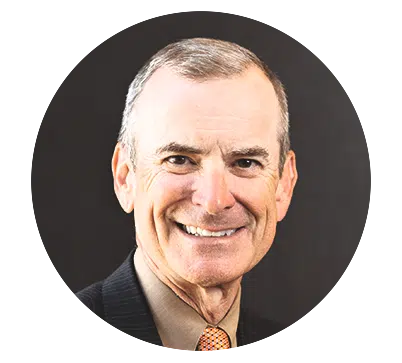 Dr. Kenneth Craycraft holds the James J. Gardner Chair of Moral Theology at Mount St. Mary’s Seminary & School of Theology. He is the author of Citizens Yet Strangers: Living Authentically Catholic in a Divided America.
This article appeared in the May 2026 edition of The Catholic Telegraph Magazine. For your complimentary subscription, click here.
The Author