
Is confession the only way God can forgive sins?
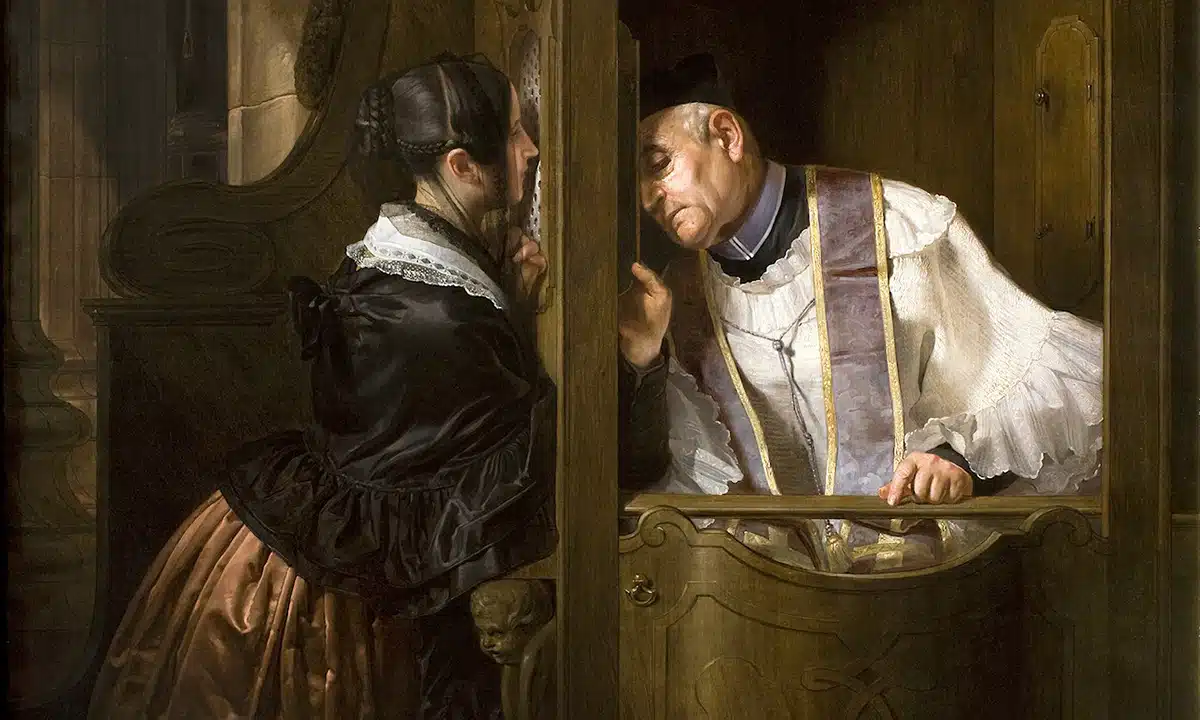
Q: Is confession the only way God can forgive sins? If not, what are the other ways?
For centuries, the Church has relied on confession for the forgiveness of sins that are committed after baptism. Sacramental confession is the ordinary means of reconciling with God and the Church when we sin. But there are other means of forgiveness, and God’s activity, including his mercy, is not bound by the sacraments. Scripture and tradition teach that God may forgive through repentance, prayer, charity, and other expressions of a desire for reconciliation.
Contrition and Forgiveness
At the heart of forgiveness is contrition: a sincere sorrow for sin and desire to amend one’s life. Contrition is a prerequisite for forgiveness in the Sacrament of Penance. Contrition, however, can be meritorious outside the sacrament.
The Scriptures give witness that if a person has a genuine desire to turn away from sin, he or she can be forgiven. For instance, the Psalmist writes, “A contrite, humbled heart, O God, you will not scorn” (Ps 51:19). And in the Gospel, when Jesus compares the tax collector and the Pharisee, he says that the tax collector who “beat his breast and prayed, ‘O God, be merciful to me a sinner,’” went home justified, not the Pharisee (Lk 18:10-14).
The Catechism describes contrition as an “interior process” that begins with God’s prompting and should, in ordinary circumstances, and especially in the case of serious sin, be “brought to completion by sacramental absolution.” By itself, contrition—when it is imperfect—does not forgive grave sins, but “it disposes one to obtain forgiveness in the sacrament of Penance” (Catechism of the Catholic Church, no. 1453).
Other Ways of Receiving God’s Mercy
Early Christians understood that sins, especially lesser sins, could be forgiven through repentance, which often took the form of external acts, such as prayer, fasting, charity, or even extraordinary actions like pilgrimage or martyrdom. These were seen not merely as good deeds but as outward signs of an inward transformation and return to God.
The Church’s liturgy contains prayers for forgiveness. When someone prays the Our Father devoutly, that person asks forgiveness of trespasses and, according to the Church’s tradition, their sin can be remitted. Similarly, at the beginning of Mass, during the Penitential Act, the people ask for God’s mercy: “Lord, have mercy; Christ, have mercy; Lord, have mercy.” The Eucharist—the medicine of immortality—has long been understood to remit venial sins and strengthen believers against future sin.
Additionally, reception of the sacrament of the Anointing of the Sick is connected with the forgiveness of sins, especially if, because of the severity of illness or lack of access to the Sacrament of Penance, the person is unable to confess.
Confession as the Ordinary Means
The Sacrament of Penance, also known as confession, developed over time. Prior to the early medieval period (around 700 AD), reconciliation was possible, but was usually only for serious sin, was of a public nature, and was not repeatable. However, private and repeatable confession to a priest gradually became the usual way of seeking forgiveness. Before confession became normative, Baptism was seen as the primary means of forgiveness. This led many people to delay Baptism until late in life.
Christians have always believed in God’s power to forgive sins and the Church’s authority to reconcile sinners and restore them to communion. Confession of sins to a priest is the ordinary means of reconciliation, but Scripture and tradition show that there are various ways a person may seek God’s mercy and begin the process of conversion. Wherever there is sincere repentance and a desire to return to Him, God’s grace is at work
The Author