Men in Black
Why do priests wear black with a white collar? What is the history and significance?
Question of Faith | Fr. David Endres
The colors of the vesture that clergy wear are diverse: from the white worn by the pope, to the bishops’ purple, to the black of diocesan priests. In each case, there is meaning and tradition behind them.
Tradition
As the Church advanced in age, separate clothing developed for the liturgy (known as vestments) and everyday wear. At first, priests’ everyday clothing was not distinct from that of others, even non-Christians. It seems that for the first 500 years of Christianity, the priests, whether St. Peter, St. Clement, or St. Augustine, did not wear distinguishable dress outside of the Mass.
Those who did wear distinctive dress were often the monks, who adopted simple, long, dark-colored robes. The color was likely chosen for practical reasons—easier to care for and keep clean. As religious life developed, each order’s habit came to signify membership in the community. For instance, Cistercians and Dominicans wore white, and Carmelites and Franciscans wore brown.
Diocesan priests, however, were not bound by the habit. It became common in the sixth century for them to wear cassocks, a long, ankle-length garment derived from ancient Roman dress. These were of various colors, including white, blue, or even green, until the thirteenth century, when black was adopted as the proper color for diocesan priests. At the same time, clergy were forbidden to wear ostentatious clothing or jewelry.
Adaptation
In the United States, diocesan priests wore the same clothes as other people—shirts, ties, and frock coats—until the late 1800s. Attire had to be practical and easily laundered, especially for missionaries, including those who rode a circuit on horseback.
The U.S. bishops met in 1884 and mandated the black cassock for parish priests when they performed liturgical duties. They also allowed for a shorter garment, still black in color, to be worn while traveling or recreating. In each case, the Roman collar was required to distinguish their attire from that of the laity. This evolved into the clerical shirt or the shirt with a jacket. While some priests wear cassocks, others find black shirts and pants more practical; it is a matter of the priest’s preference.
Current church law requires that clergy “wear suitable ecclesiastical garb in accord with the norms issued by the conference of bishops and in accord with legitimate local custom” (Code of Canon Law, 284). Though black is normative, white garments are permitted in some places, especially in warmer climates. While distinctive dress is encouraged, it is not necessary at all times: for instance, priests usually wear non-clerical attire when exercising or performing manual labor.
Sign Value
While some Protestant clergy wear similar vesture, the black shirt and white collar remain the most recognizable attire for Catholic priests. The choice of black has taken on a spiritual meaning. The dark color has been variously interpreted to represent poverty, the priest’s death to the world, or the need for mourning for sin. The collar has been associated with obedience.
A priest’s black attire is a visible expression of his identity and provides opportunities for ministry. It is not unusual for people to approach a priest in public, even one they do not know, to ask for advice, support, or prayer. Just as the “habit doesn’t make the monk,” clerical attire doesn’t make the priest, but it is a sign to others that goes back centuries.
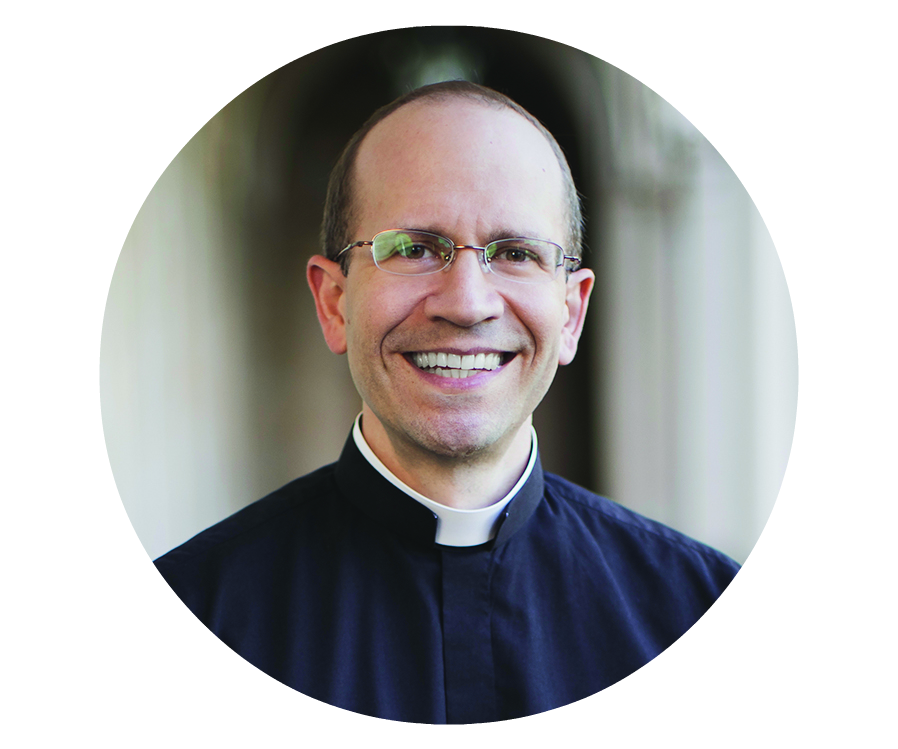 Father David Endres is professor of Church history and historical theology at Mount Saint Mary’s Seminary & School of Theology.
This article appeared in the March 2026 edition of The Catholic Telegraph Magazine. For your complimentary subscription, click here.
The Author