Mutual Submission Part One
by Andrew J. Sodergren, M.T.S., Psy.D.
Note: This article is part of an ongoing series on Pope St. John Paul II’s “Theology of the Body.”
As we saw in last month’s article, the theological principle of analogy allows us to compare human concepts and experiences with divine realities. These analogical comparisons are a valid way to deepen our understanding of theological mysteries as long as we remember that there is always a greater dissimilarity between God and humanity than there is a similarity. God is eternal, infinite, and perfect. Human beings are mortal, finite, and fallible. Yet, all of creation—and especially human beings—bear a likeness to the Creator.
In Ephesians 5:21-33, when St. Paul compares human marriage with the relationship of Christ and the Church, he is drawing an analogy. He is saying that there are genuine similarities between these two relationships while there are also vast differences. While both are marked by spousal love, Christ is infinitely superior to the Church as its divine creator, savior, and head, whereas human marriage is a relationship of two equals. This point was very important to Pope St. John Paul II and figured prominently in his reflections on marriage in Theology of the Body.
Ephesians 5:21-33 begins with the exhortation to “be subject to one another out of reverence for Christ.” According to the late pope, this opening line provides the framework for everything that follows. Thus, St. Paul “speaks about the mutual submission of the spouses, husband and wife, and in this way shows also how to understand the words he writes afterward about the submission of the wife to the husband” (TOB 89.3). While St. Paul goes on to exhort wives to be subject to their husbands, Pope St. John Paul II opposed any interpretation that implies a one-sided submission or supports male domination. The pope taught that St. Paul “does not intend to say that the husband is the ‘master’ of the wife and that the interpersonal covenant proper to marriage is a contract of domination by the husband over the wife.” Indeed, according to John Paul II, Christian marriage positively “excludes this element…, which weighed on this institution and at times does not cease to weigh on it.” Thus, in his view, the submission described by St. Paul is “not one-sided submission.” Rather, “Husband and wife are, in fact, ‘subject to one another,’ mutually subordinated to one another” in Christ (89.3).
Pope St. John Paul II’s teaching on the mutual submission of spouses in Christian marriage has been somewhat controversial and deserves careful consideration. The pope was not telling spouses how to go about making decisions in their day-to-day lives as married couples. Rather, he was speaking about how they regard and relate with each other in general. For him, a fundamental principle of marriage is the equal dignity of men and women. As we saw in the pope’s reflections on original unity in Part One of TOB, man and woman are both made in the image of God and bear the dignity of being persons, His sons and daughters. The pope summarized this principle in his apostolic letter Mulieris dignitatem by saying, “Man is a person, man and woman equally so, since both were created in the image and likeness of the personal God” (no. 6).
Furthermore, when man and woman are baptized into Christ, their dignity is elevated to be co-heirs with Christ in the Kingdom of God. Christ (and, indeed, the entire Blessed Trinity) comes to dwell within each of them, and they are incorporated into the Church, the Body of Christ. Indeed, to become a Christian literally means to become a “little Christ.” Since each one is intimately united to Christ, it is fitting for Christian spouses to reverently “submit” to each other because in doing so, they submit themselves to Christ dwelling in the other. Pope St. John Paul II taught that “the source of this reciprocal submission” lies in reverence for Christ “and its expression is love” (89.3). We will continue to explore the meaning of the mutual submission of Christian spouses and how it enlightens our understanding of marriage as a sacrament and a path to holiness.
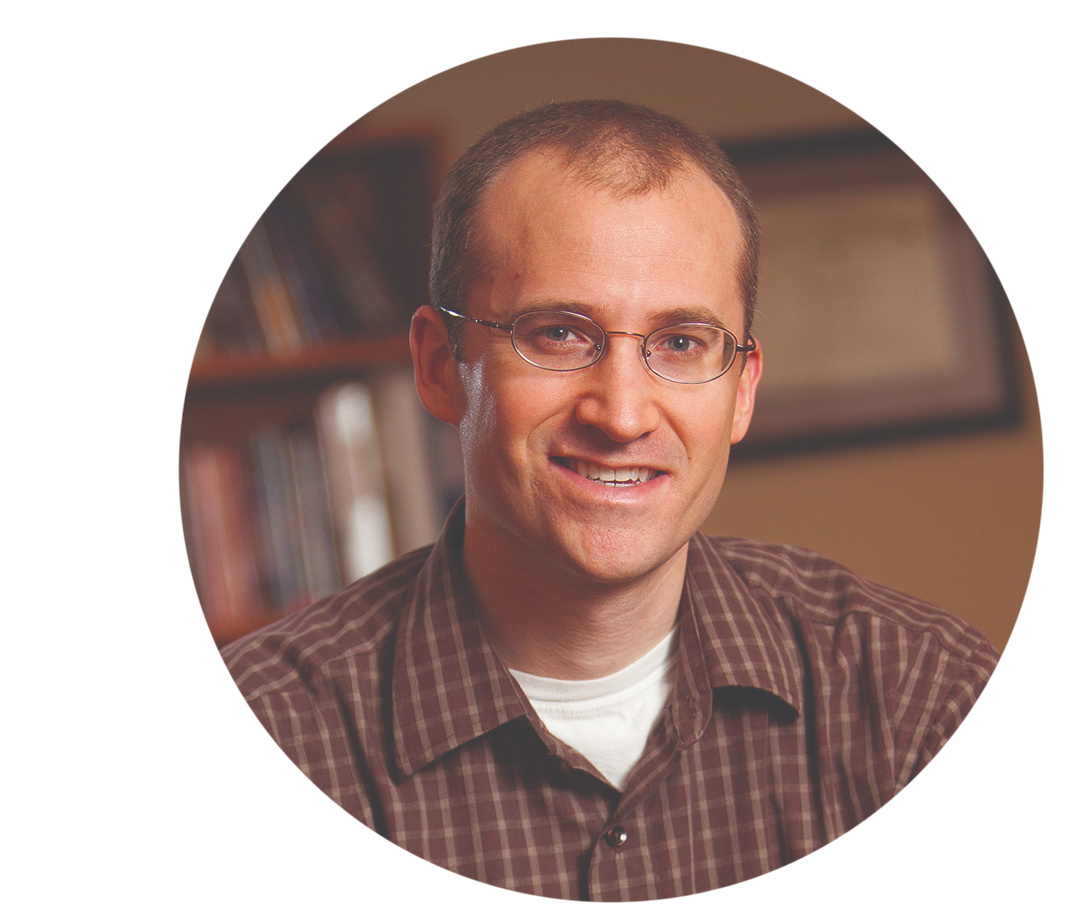 Dr. Andrew Sodergren is a Catholic psychologist and director of psychological services for Ruah Woods. He speaks on the integration of psychology and the Catholic faith. He and his wife, Ellie, have five children.
This article appeared in the January 2026 edition of The Catholic Telegraph Magazine. For your complimentary subscription, click here.
The Author