
Restoring Local Grave Sites of Revolutionary War Veterans
McNicholas Students and Veterans Restore Forgotten Grave Sites at Fulton-Presbyterian Cemetery
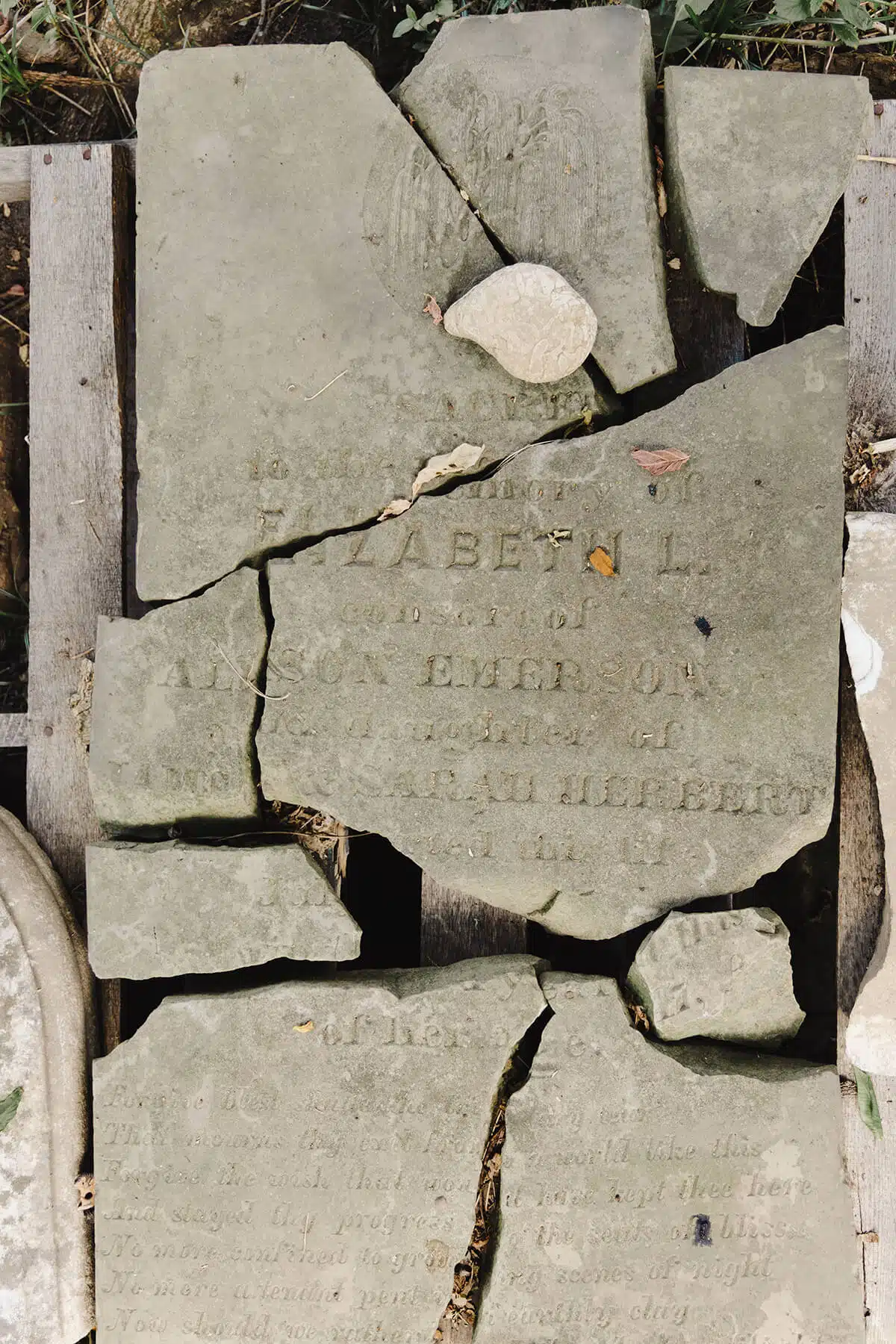
As faithful Catholics, we are called to perform corporal works of mercy, including respectful care of the deceased. Recently, students from Archbishop McNicholas High School, along with some local veterans, restored a forgotten cemetery where several Revolutionary War veterans are buried that was suffering from decades of neglect. Their endeavor is even more poignant as we recognize our country’s 250th anniversary, and observances remind us that we should always remember the soldiers who made our nation possible.
When he discovered the abandoned Fulton-Presbyterian cemetery off the Ohio River Trail in an industrial area of Columbia-Tusculum four years ago, James Hay, a Marine Corp veteran and McNicholas High School alumnus, acquired its property title for American Legion Post 744 and led restoration efforts.
Hay’s fellow vets and continually changing crew of McNicholas students have painstakingly cleared brush, vines, and other invasive plant species. The makeshift crews cut around engulfing, large, tangled roots to dig out submerged headstones, using a small collection of shovels and hatchets. Floods and erosion make the work harder and muddier.
“When we identify one [headstone], we mark it and start digging around it,” said Hay. Using spray bottles to clear the soil from the stones, they look for engravings. “[Those] in good shape, we can salvage,” said Hay, “but if they’re in pieces, there’s nothing I can do about it.” An added difficulty is that “it’s hard to know what’s a head stone or just a stone when you begin digging,” said Jeff Zalar, a Marine Corp vet, member of American Legion Post 484, and Chair of the Catholic Studies program at the University of Cincinnati.
Zalar said it is “unacceptable” that the cemetery had been allowed to deteriorate to such a condition, especially with so many Revolutionary War veterans buried there. “This is really a scandal … when you think about how much veterans have contributed to the defense of this country.”
Continental Army Soldiers were mostly poor commoners who fought and served while enduring harsh conditions with little to no pay. Unfortunately, in many cases they returned home to nothing, not even back pay. And yet, without the sacrifice of these soldiers, America would not have won its independence.
That is why it is important to “preserve the memories of these Revolutionary War veterans,” said James Gaunt, a McNicholas student and member of its Military History Club.
Anne Steinmetz, also a Military History Club member, said she “wanted to honor people who had been in wars,” adding that her father had told her to “always respect veterans.”
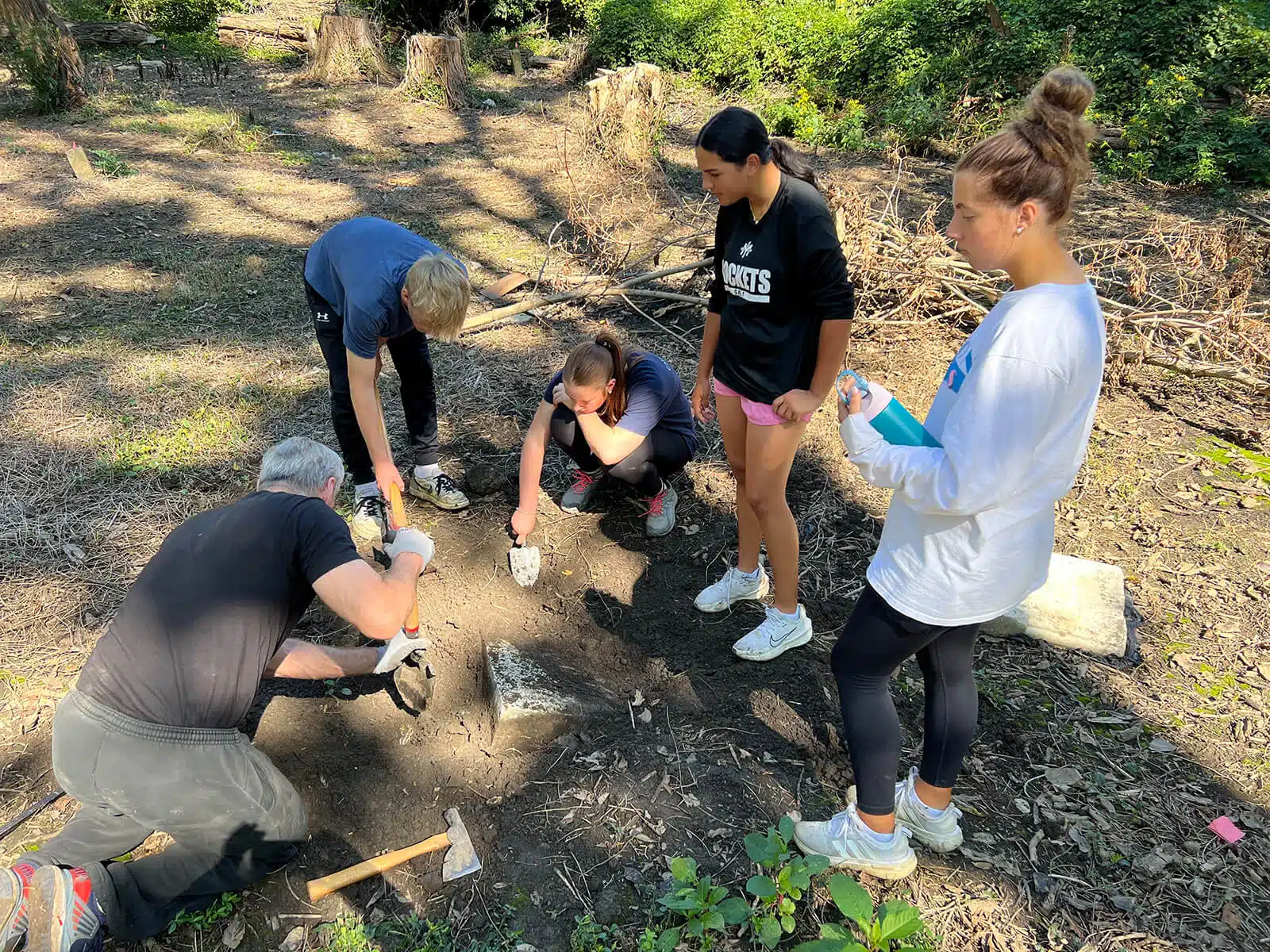
Most students working in the cemetery had family—great grandfathers, grandfathers, aunts, and sisters—who were veterans, including some who served in World War II and Vietnam. Students who were earning service credit for their AP Government or History classes, including Molly Armstrong, Tori Stewart, Elena Escamilla, Annabell Moeves, Connor Miller, Blayden Chitwood, and Brendan Dennis, all agreed that it was “important to honor veterans.”
Randy Royal, who founded and advises the Military History Club, said his family had a strong history of military service, including an uncle and cousin who served in the Marine Corps and another relative who was a pilot in Vietnam.
Now in its fourth year, the club has averaged a small number of members but made a big impact in restoring the cemetery with the American Legion. Royal said their dedication to the project has been indispensable, and “they are really excited about the military.”
“McNicholas as a whole is very supportive of vets,” said Royal, who attributes the backing to the school’s strong alumni program, particularly alumni like Hay, who served in the military and continues to serve as a veteran preserving the memory of other veterans.
Sean Young, an AP History teacher at McNicholas, said he liked the opportunity of “getting kids out here to do something service-related that is also related to history.” McNicholas student Judah Kelly noted that the cemetery project is “important work, and it’s sad that these people were forgotten back here. They deserved to be remembered.”
The students volunteering this year are all juniors or seniors, and several have helped since eighth grade. This project is now part of their legacy.
The Author