Servant of God Julia Greeley
The Secret Servant of the Sacred Heart of Jesus
 The Saintly Seven: Black Catholics on the Path to Sainthood
Servant of God Julia Greeley c. 1833-48–1918
The Secret Servant of the Sacred Heart of Jesus
By Diane Mengos
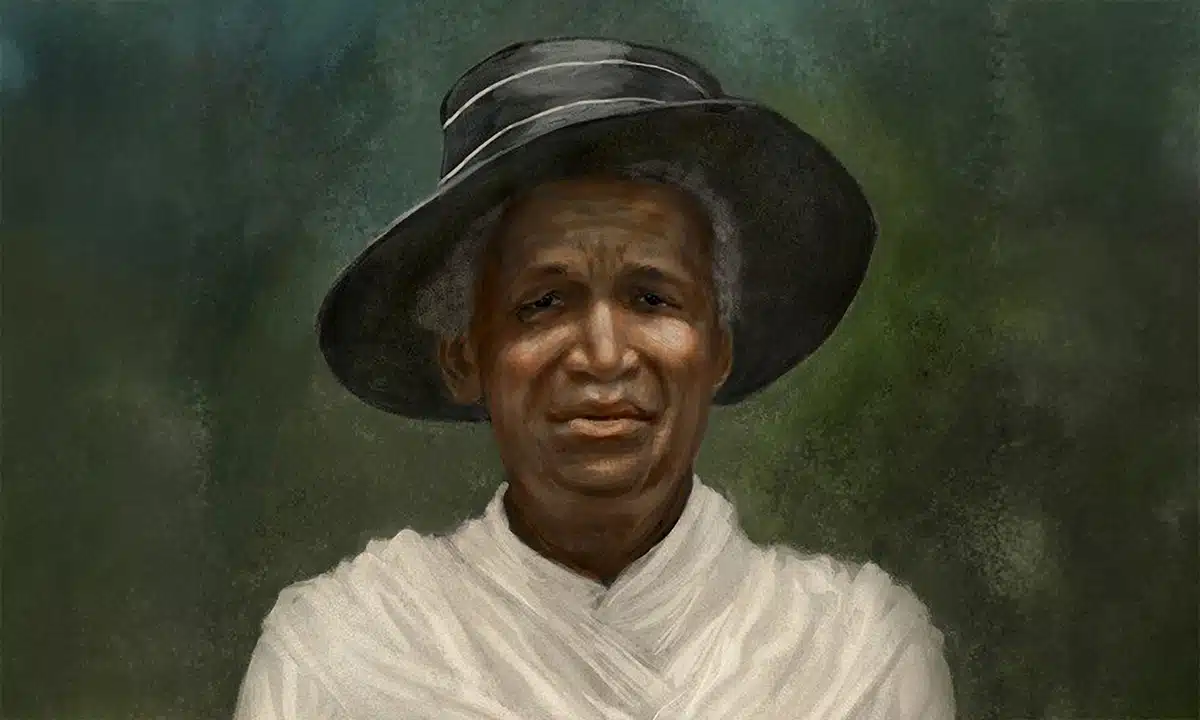
The Cathedral Basilica of the Immaculate Conception in Denver, Colorado, is the resting place for one saintly person: a humble African American laywoman named Julia Greeley. Encapsulated in marble and placed prominently near the cathedral’s front, her tomb celebrates a former slave who owned nothing but her faith in Jesus and His call to serve others out of her poverty. Her life continues to inspire all who learn about her. Today, we have an opportunity to pray with her to God for miraculous help.
Julia’s inspiring story begins with a recognition of her oppressed status throughout her life. Born into slavery in Hannibal, Missouri, she never knew her birthdate, which is estimated to be between 1833 and 1848. When Julia was ill as a young child, her mother was scourged with a whip for staying in from the field to tend to her. It is believed the end of the whip caught young Julia’s right eye as she clung to her mother and it never healed.
Once freed of her servitude by the state of Missouri in 1865, she found employment as a domestic servant for a wealthy family who introduced her to Catholicism and invited her to work for them in Denver, Colorado. Her newfound faith gave her life fortitude, purpose, and an astounding ability to love and forgive even while society continued to treat her as a second-class citizen.
Julia was a witness to the love of Christ for all people and won over multitudes—rich and poor alike—who grew to revere her. Her daily life of prayer was matched by her daily life of service. Fasting each morning, she walked to church from whatever room she could rent around the city. Receiving Holy Communion, praying in adoration, and cleaning the church were part of her regular routine before she set out to work wherever she could—cleaning, cooking, or caring for children. From her meager pay, which sometimes did not cover her basic needs, she shared her earnings and she gave her extra energy to the needy in her community.
During her years in Denver, its population was burgeoning, and its destitute were known and loved by Julia. As a Third Order Franciscan, she begged like St. Francis from the wealthy and delivered to the impoverished. She often made her daily treks around Denver with a red wagon on which she gathered firewood, food, baby supplies, clothing, and even mattresses. Gathering by day, she delivered in the darkness. Julia wore the same basic dress, coat, and hat each day, keeping none of the nice apparel donated by the affluent; she instead gave them to poor families for special events.
Also noteworthy in Julia’s life was her devoted support for her Sacred Heart Church’s fundraising and charitable collections; she topped the list for tickets sold and meetings attended. She had a distinct love for children—both privileged and underprivileged—and assisted at the homes of newborns, orphans, and families with illness, giving them her tender love and playful attention.
Also remembered for her attention to Denver’s firefighters, Julie walked to every fire station each First Friday of the month, delivering Sacred Heart badges and leaflets. Her friendship and prayers spiritually supported the men. They, in turn, informed her of the community members in need of her help.
Firemen and policemen were among the hundreds of people who attended Julia’s wake on June 9, 1918. Even without a newspaper notice, word spread quickly around Denver of her death. Rich and poor alike headed to Loyola Chapel on Ogden Street to pay their respects to a woman in whom they recognized extraordinary holiness, compassion, and humility. The stream of visitors continued without pause for five hours that summer day, just two days after she died on the Feast of the Sacred Heart.
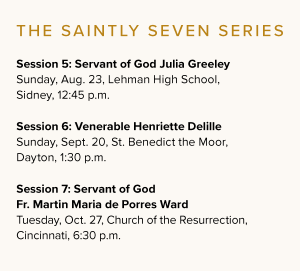
The Archdiocese of Cincinnati, through the Anti-Racism Task Force, invites all Catholics and people of our region to hear more about the beautiful life of Julia Greeley in this fifth installment of the Saintly Seven Series, which celebrates seven black Catholic Americans on their way to canonization. A free Julia Greeley Lunch is being offered for all ages, to begin at noon on Sunday, August 23 at Lehman Catholic High School in Sidney (childcare provided if noted at pre-registration). The program begins at 12:30 and ends at 2 p.m. Registration is helpful for food preparation. All who attend will find delight in the stories presented by several narrators, the table activities, and the special gift each household will take home to remember Servant of God Julia Greeley of Denver, Colorado.
Diane Mengos is a doctoral student in Theology and Religious Studies at the University of Dayton.
The Author