


What is the Purpose and History of Holy Water?
Question of Faith
By Fr. David Endres
Holy water is a common sacramental used by Catholics—to sign themselves before entering church, to sanctify the home, and to call forth divine protection. Ordinary water becomes holy water when it is blessed by a priest or deacon, who calls down the Holy Spirit to sanctify it. Its use is deeply rooted in Church history and reflects the broader theological understanding of water as a symbol of purification, new life, and grace.
It is also an element that has a natural correspondence to its spiritual meaning: as a substance, water is easily recognized for its cleansing effects. Long before Christianity, water was seen as representative of ritual purification and spiritual renewal.
Jewish Roots
The Old Testament alludes frequently to water’s cleansing effect. In the Book of Ezekiel, the Lord promised, “I will sprinkle clean water over you to make you clean; from all your impurities and from all your idols I will cleanse you” (Ez 36:25). And in Psalm 51, a penitent King David said, “Thoroughly wash away my guilt; and from my sin cleanse me” (Ps 51:4, NABRE).
Elsewhere, water’s spiritual effects are referenced in a ritual context, as when the prophet Elisha instructs Naaman to wash in the Jordan River seven times. When Naaman obeys, he is cleansed: “His flesh became again like the flesh of a little child, and he was clean” (2 Kgs 5:14).
Unsurprisingly, Jewish believers placed great importance on ritual baths. According to the Mosaic law, water was necessary to cleanse a person whenever they became unclean, whether from touching a corpse or an unclean animal.
Christian History
The use of “holy” water by Christians appears to date to apostolic times. According to one tradition, St. Matthew recommended it, and because water’s ritual use was a familiar practice to Jewish believers, it attracted them to Christianity. Exactly how it was used—whether in private devotion or public rituals—is unclear.
A form of blessing water is found in a fourth-century prayer book, and the practice of placing holy water at the doors of churches is testified to in documents from the medieval period. The sprinkling of the faithful at Mass (called the asperges—taken from the first word of Psalm 51:9, NAB Revised Edition) goes back to at least the ninth century.
Holy Water’s Uses
Holy water is used to bless objects and persons. This includes the blessing of homes, the sprinkling of a casket during a funeral, and the submersion of the paschal candle in holy water at the Easter Vigil.
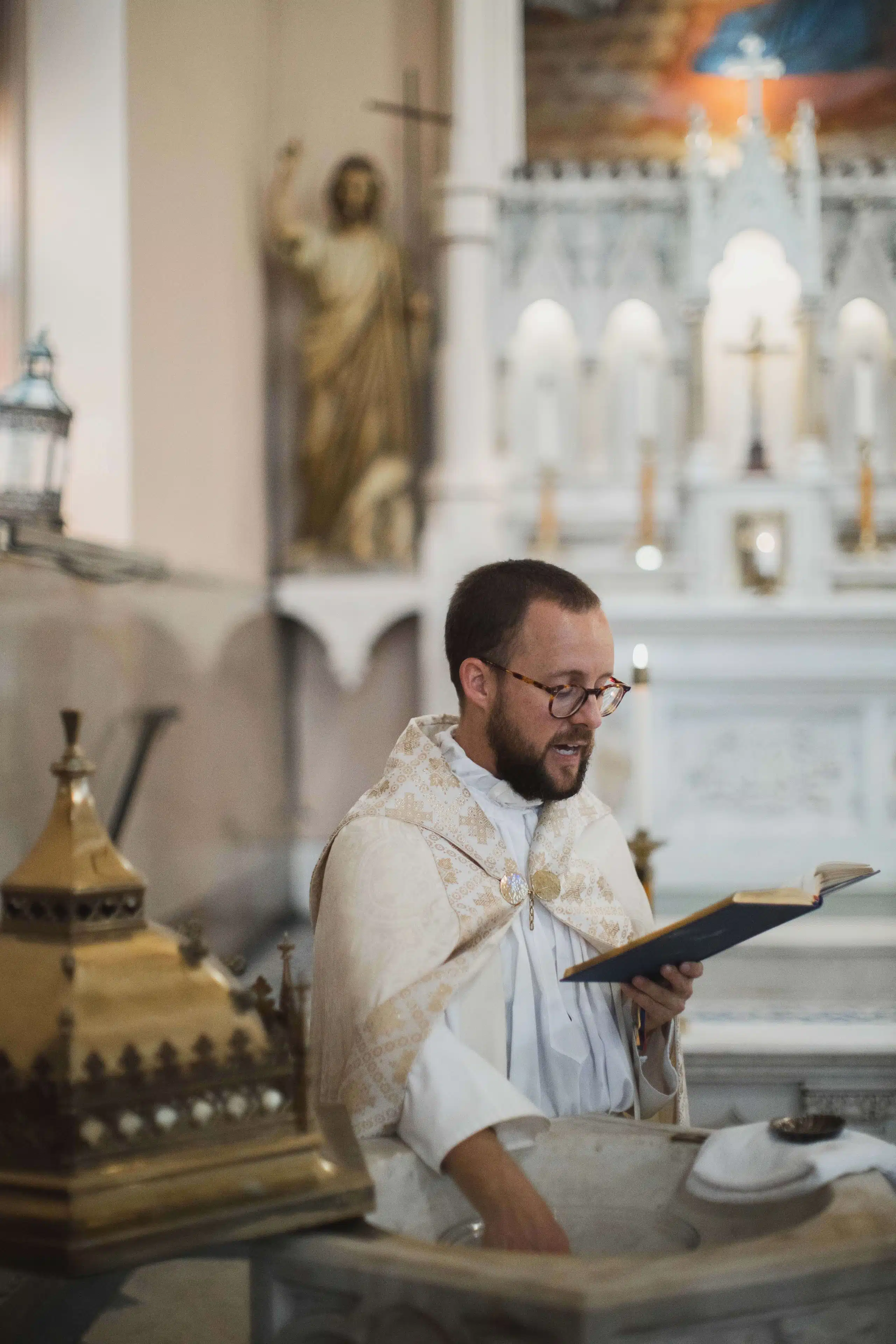
It also has a special role in the Sacrament of Baptism. During baptism, the priest or deacon prays over the water in the font, and he recounts salvation history, explaining how God used water to reveal himself: beginning with creation and continuing with the flood, the parting of the Red Sea, and Jesus’ baptism in the Jordan River, then concluding with Jesus’ command to “Go, therefore, and make disciples of all nations, baptizing them in the name of the Father, and of the Son, and of the Holy Spirit.” The newly sanctified water is then poured over the person (or the person is immersed into it).
Throughout a Christian’s life, holy water helps them recall their baptism and the promises made at baptism. This is why it is placed in fonts at church doors for people to sign themselves and why it is sprinkled during the renewal of baptismal promises. It is a sacramental that reminds us of spiritual regeneration, just as it reminded Jewish believers and Christians throughout history.
The Author