





Why are priests called “father”?
Q: Why are priests called “father”? What is the history, and isn’t it discouraged in the Scriptures?
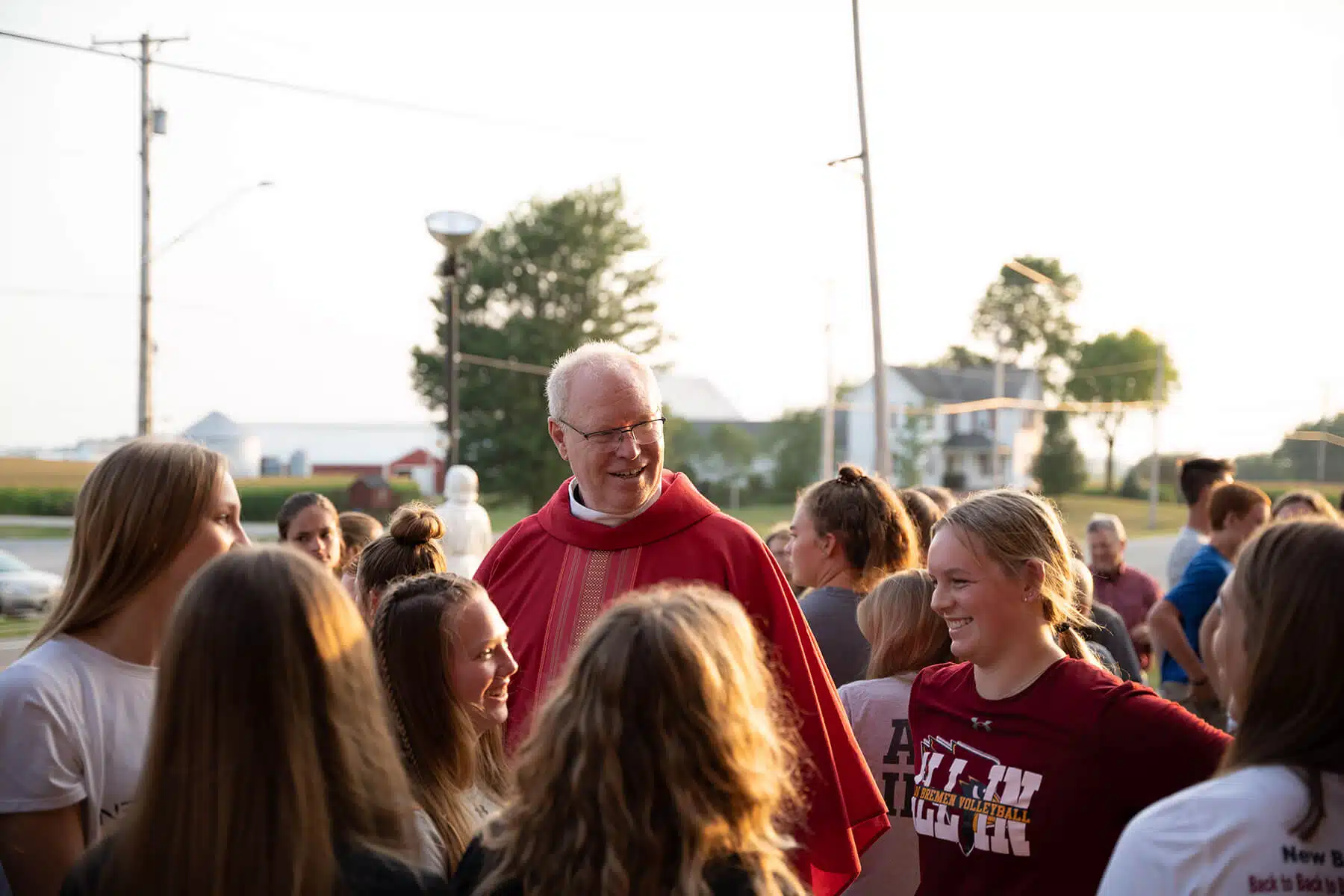 The title “father” as applied to priests in the Catholic Church has both historical and theological significance. It reflects the role of priests as spiritual leaders and caretakers of their communities, analogous to a biological father’s role in a family. The use of this title, however, also raises questions about its compatibility with Scripture, especially its potential prohibition in Matthew 23:9, where Jesus says, “Call no one on earth your father; you have but one Father in heaven.”
Earthly Fathers
Some Protestants highlight the potential incongruity of father as a priestly title, but most Christians, whether Protestant or Catholic, do not interpret the Scriptures as condemning all those who use this term. Otherwise, calling one’s father or grandfather by this name would be problematic.
Nor does “father” stand on its own among the potentially problematic titles. The broader passage from Matthew (23:8-10) cautions against other honorific titles, such as rabbi and master (sometimes translated as “teacher”). Christians have not generally understood these titles as absolutely forbidden, but rather as a warning against placing oneself above God.
Spiritual Fathers
The use of the term “father” to denote spiritual authority is an ancient practice. The first Christian teachers and preachers, known as the Church Fathers because of their spiritual paternity, witness to such usage. St. Ignatius of Antioch and St. Clement of Rome, who both lived during the first century, refer to spiritual paternity; mirroring the words of St. Paul, who called himself a “father in Christ” through the Gospel (1 Cor 4:15).
Over the centuries, “father” came to be applied to various forms of spiritual fatherhood, from desert monks in Egypt and bishops in the early Church to heads of monastic communities (abbots, from the Biblical word “abba”). Eventually, clergy in general were called “fathers,” though this practice was not universal across time and place. Dom or Don, meaning “lord” or “master,” were also terms used for priests in some places. The usage of “father” as a title for priests became more common in Europe by the Middle Ages.
Biblical Interpretation
The correct interpretative lens is the key to understanding “call no one on earth your father.” Catholics interpret Scripture in its literary, historical, and theological contexts rather than isolating verses from their broader meanings.
The command to “call no one on earth your father,” for instance, contains an important spiritual lesson. In its immediate context, it is a teaching on the proper understanding of authority. Jesus is warning against elevating any human above the divine.
On behalf of Christ
Even if it can be proper to call someone a rabbi, teacher, or master, that person’s authority does not substitute for God’s. They are His ministers, who assist others in following the Lord, but they are not Him. A term commonly used in the Church refers to the priest as acting in persona Christi (in the person of Christ), participating in Christ’s unique mediation. They are not the Lord, but they assist others in encountering Him.
While the Bible cautions against the misuse of authority, the Church allows for the respectful use of the title “father” in the context of priestly ministry. “Father” has consequently become a term of respect and endearment for priests, reflecting the role of priests in the lives of those to whom they minister.
The Author