

Ministry of Service
The Formation Path of the Catholic Deacon
“For, strengthened by sacramental grace, they [deacons] are dedicated to the People of God in conjunction with the bishop and his body of priests, in the service of liturgy, of the Gospel and of works of charity.”
Lumen Gentium, The Dogmatic Constitution on the Church, Second Vatican Council, Nov. 21, 1964
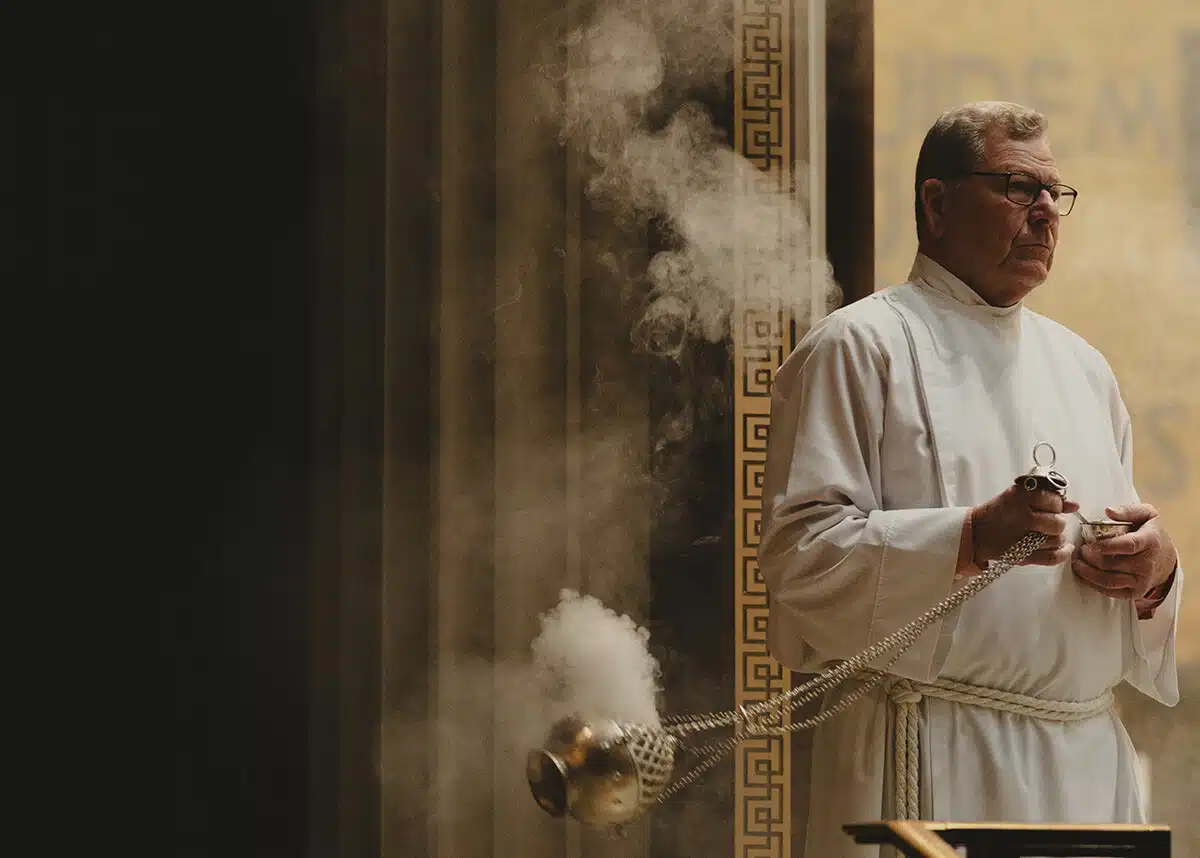
In 1964, the Second Vatican Council issued the Dogmatic Constitution on the Church, Lumen Gentium, which restored the diaconate as a permanent rank of the hierarchy of Holy Orders. For centuries prior, the order of deacon was reserved as one step toward ordination as a priest. Realizing the difficulty in fulfilling the need for the many ministries in the life of the Church, the Council reestablished the order of the permanent diaconate. Tens of thousands of men have since been ordained as permanent deacons. As of 2023, over 51,000 permanent deacons actively serve worldwide, with more than 21,000 of them (over 40%) serving in the United States.
Such numbers evidence the intense passion of Catholic men to answer the call to serve the Church as an ordained deacon. In our own archdiocese, nearly 200 deacons serve our Families of Parishes, and another 18 are currently studying at the seminary, having completed the Aspirancy phase and the first of three years of formation for the diaconate. In fact, a significant milestone will be celebrated in the archdiocese this September: the 50th anniversary of the first ordinands to the permanent diaconate. In 1976, two separate ordinations took place because of the large number of ordinands: 11 men were ordained Sept. 25 by then Auxiliary Bishop Daniel E. Pilarczyk, and 28 men were ordained Sept. 26 by Archbishop Joseph L. Bernardin.
So, how does a man become a deacon in the Catholic Church? The Church has established the basic qualities that men should possess when considering the vocation of deacon. These include:
· Emotional maturity
· Personal integrity
· Christian holiness and an active prayer life
· Generosity for service already being demonstrated
· Good physical and psychological health
· Ability to work in a team; work well with people
· Good communication skills, both as a speaker and as a listener
· Ability to speak publicly and proclaim the Gospel effectively
· Acceptance by the Catholic community as evidenced by his ministry in the parish
The discernment of this vocation must start with self-reflection and an interior examination of a man’s motives, desires, and state of life. First, do you have a solid prayer life and do you participate regularly in Mass and the Sacrament of Penance? Second, do you serve in the ministries of your parish and local community? Third, do you feel called to dedicate yourself to the service of Christ and the Church? And finally, have you spoken to others—your wife, your pastor, a deacon—to allow them to help you recognize what is God’s call and how to respond to it?
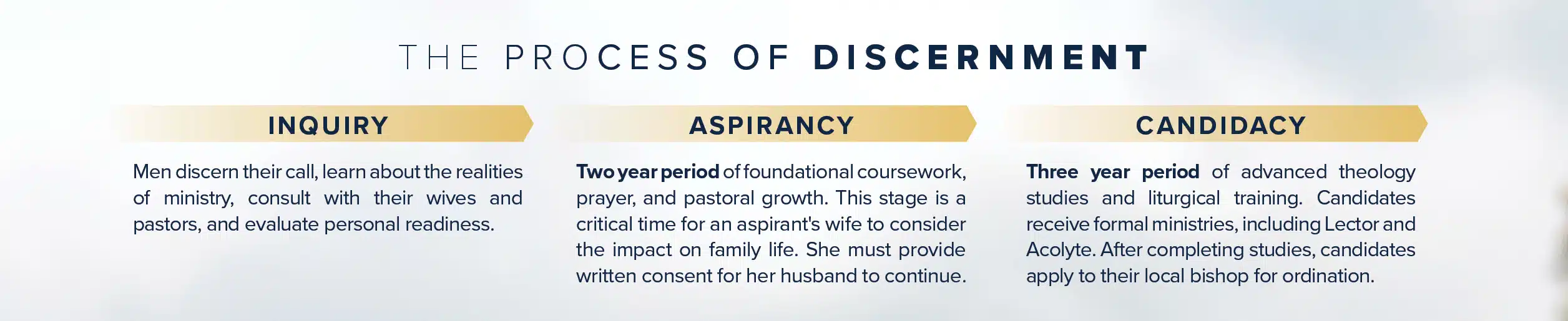
The journey toward ordination as a deacon requires a commitment of at least five years of formation. The first two years are called Aspirancy, in which a man is “aspiring” to possibly become a candidate for Holy Orders. Aspirancy is a program of basic academic formation classes in the Lay Ecclesial Ministry Program at Mount St. Mary’s Seminary and School of Theology, coupled with periodic discernment meetings with the men and their wives and other men considering the diaconate.
Upon completion of Aspirancy, men may apply for the three-year Deacon Formation Program. If accepted, they become candidates for Holy Orders, which culminates in ordination. It is a rigorous program that requires sacrifice on the part of the man as well as his wife and family. But for the men called to this vocation, the years of education and formation are simply one more way to express their desire to serve the Lord and His Church, the people of God.
Throughout the formation journey, prayer and participation in the sacraments are essential, and a man meets with a spiritual director and academic advisor. The formation years are currently overseen at the seminary by Fr. Eric Wood, the Director of Permanent Deacon Formation for the Archdiocese of Cincinnati, in conjunction with the Office of the Diaconate.
The Author


