
Pope Leo XIV closes St. Peter’s Holy Door, concluding Jubilee of Hope
Vatican City, Jan 6, 2026 / 07:00 am
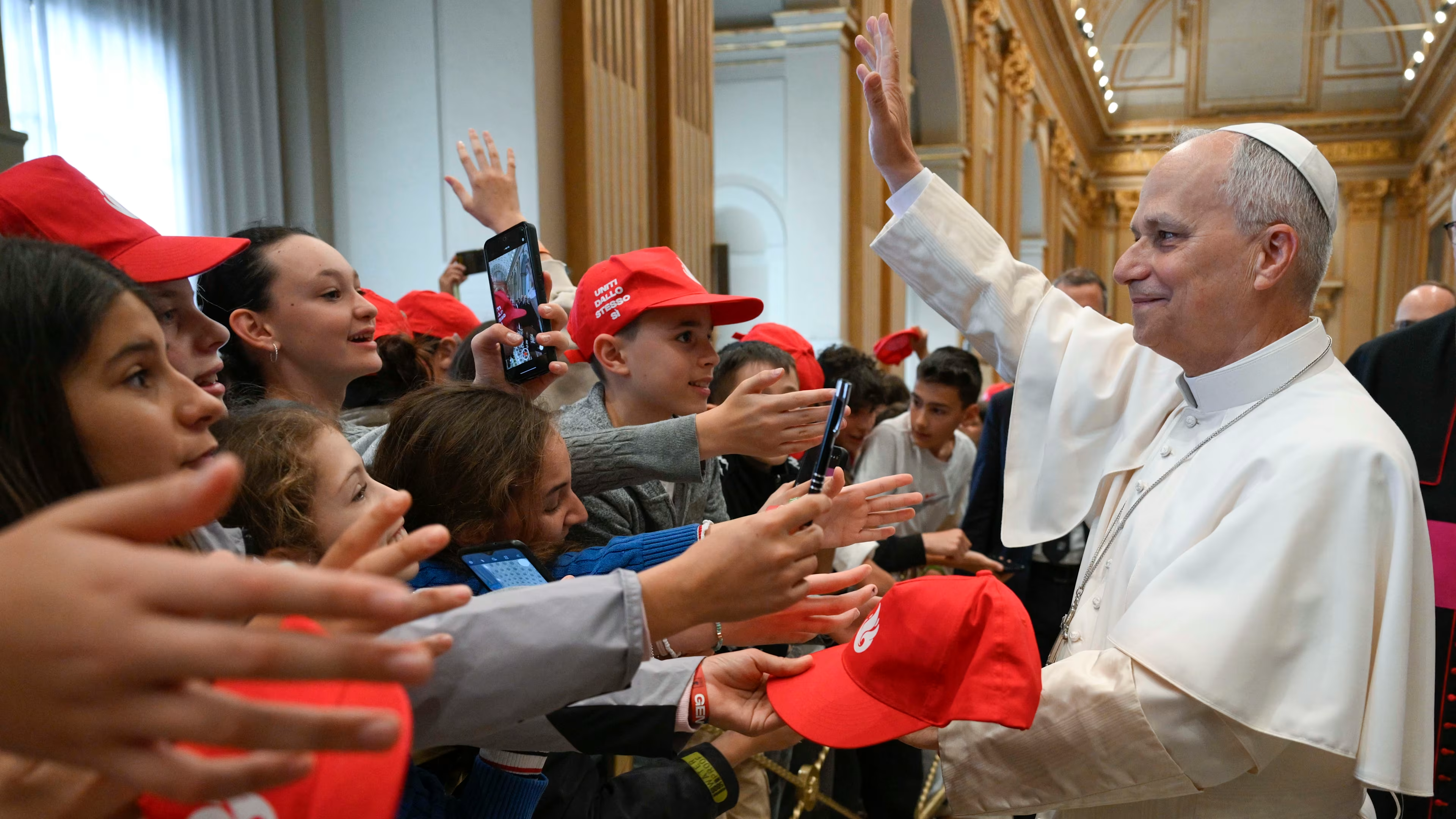
Pope Leo XIV on Tuesday closed the Holy Door of St. Peter’s Basilica, bringing the ordinary holy year to an end — a time of grace that invited Catholics to conversion, reconciliation, and hope.
The pontiff processed toward the Holy Door as the antiphon “O clavis David” was sung. Reaching the threshold, he knelt before the door and remained for a few minutes in silent prayer. He then rose and, at 9:41 a.m., pushed shut the two large bronze doors — a gesture that visibly marked the end of the jubilee season.
“With thankful hearts we now prepare to close this Holy Door, crossed by a multitude of faithful, certain that the Good Shepherd always keeps the door of his heart open to welcome us whenever we feel weary and oppressed,” Leo XIV said in an address before the concluding gesture that ended the ecclesial event, ordinarily held every 25 years to offer the faithful the possibility of obtaining a plenary indulgence.
With these words, Leo XIV emphasized that even though the jubilee has ended, God’s mercy remains ever open to believers.
Before closing the doors, the Holy Father pronounced in Latin the formula prescribed by the rite, following a practice established in 1975 and later simplified by St. John Paul II during the Jubilee of the Year 2000.
In keeping with the simplified celebration, the public rite did not include the portion involving the construction of a brick wall and was limited to the closing of the bronze doors. The masonry work itself will be carried out later, privately, about 10 days after this public rite.
The act will be overseen by the Office of Liturgical Celebrations of the Supreme Pontiff. The so-called “sampietrini” — personnel of the Fabric of St. Peter, including carpenters, cabinetmakers, and electricians who normally handle basilica maintenance — will build the brick wall inside the basilica to definitively seal the Holy Door.
During this private rite — without cameras or journalists — the traditional metal capsule (“capsis”) will be inserted into the wall. It will contain the official act of closure, coins minted during the jubilee year, and the keys of the Holy Door as a material and symbolic testimony of the holy year that, as the pope noted, has ended on the calendar but not in the spiritual life of the Church.
Leo XIV then recited the prayer of thanksgiving for the ordinary holy year, proclaiming: “This Holy Door is closed, but the door of your mercy is not closed.”
The formula concluded with an invocation that the “treasures” of divine grace would remain open “so that, at the end of our earthly pilgrimage, we may confidently knock at the door of your house and enjoy the fruits of the tree of life.”
The Jubilee of Hope was instituted on Dec. 24, 2024, by Pope Francis but, after his death in April 2025, was concluded by his successor, Leo XIV — a situation not seen since the year 1700. The last ordinary jubilee (celebrated every 25 years) took place in 2000.
Jubilees may also be celebrated at “extraordinary” moments, such as the Jubilee of Mercy celebrated by Francis in 2015 or the one to be convoked in 2033 to commemorate the two millennia of the death and resurrection of Jesus.
After closing the Holy Door, Leo XIV presided over Mass for the solemnity of the Epiphany of the Lord inside St. Peter’s Basilica, bringing the day’s liturgical celebration to its conclusion.
This story was first published by ACI Prensa, CNA’s Spanish-language news partner. It has been translated and adapted by CNA.
The Author