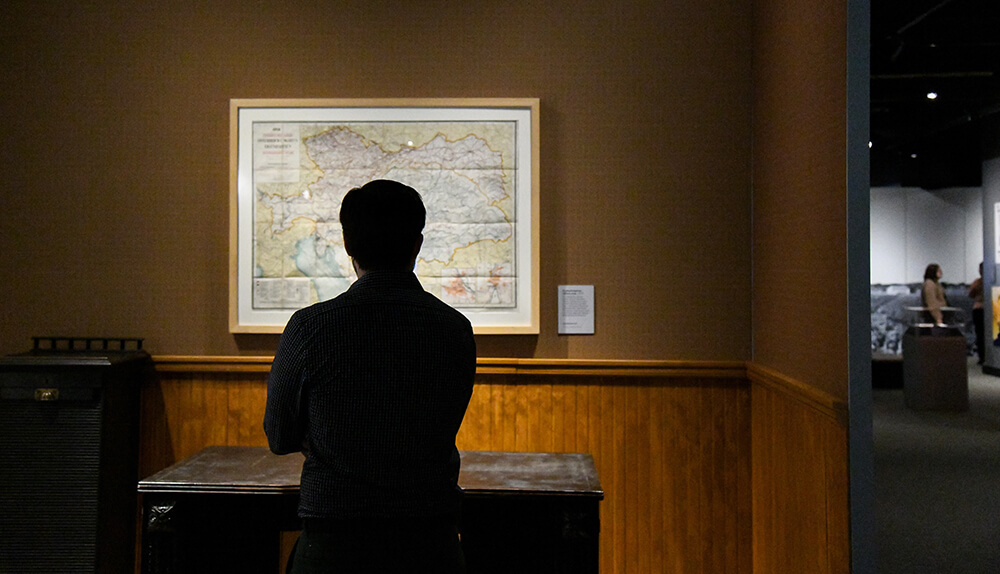

A lone little shoe with the sock still inside stands encased in a glass cube as evidence of the Nazi’s cruelty and inhumanity. It is one of the 500 artifacts and 400 photographs on display at the Cincinnati Museum Center as part of the exhibition: “Auschwitz. Not long ago. Not far away.” It’s the most comprehensive collection of items dedicated to the history of Auschwitz that has ever been presented in the United States. The shoe’s mate was not recovered; neither was the child who wore it. He or she was likely one of the 1.1 million people murdered at the infamous concentration camp.
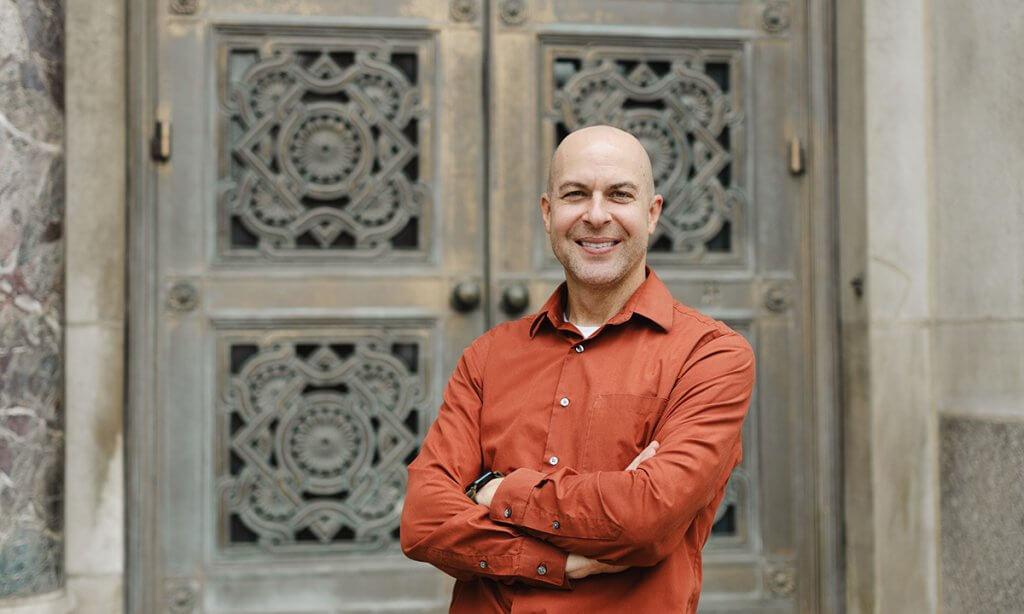
“I think it’s really important for us to understand the evil that has been perpetrated by people who called themselves Christians and to understand the severity of what can happen if people don’t stand up, if people don’t speak up,” said Andrew Musgrave, the Director of Social Action for the Archdiocese of Cincinnati.
This is the only stop in the Midwest for the exhibition and its last planned stop in the U.S. The first portion of the exhibit lays the groundwork for the happenings in Germany and Poland at the time. It explains how the once bustling town known as Oświęcim became Auschwitz, which now exemplifies the worst things human beings can do to each other.
In addition to Jews, tens of thousands of Poles, Sinti, Roma, Soviet POWs, Jehovah’s Witnesses, and homosexuals were rounded up and forced into work camps or the gas chamber. Their baggage, clothing, and belongings were looted by SS officers, much like the soldiers who cast lots for Christ’s garments during His Crucifixion. Among the victims highlighted is a young Polish priest named Maksymilian Maria Kolbe, who secretly heard confessions in the camp and encouraged others to pray. He traded places with another prisoner who was facing certain death—that man survived the war. Father Kolbe died a martyr and was canonized a saint in 1982.=
“This [exhibit] has been described as the closest thing to [having] an experience on the ground in Poland because of [its magnitude] … the diversity and number and size and scope of the artifacts,” said Jackie Congedo, CEO of the Nancy & David Wolf Holocaust and Humanities Center. The center partnered with the Museum Center to bring the exhibition to Cincinnati.
According to President and CEO of the Cincinnati Museum Center Elizabeth Pierce, it’s a “huge” deal to have this exhibit at Union Terminal.
“It’s an incredible collection,” she said. “To have the Auschwitz-Birkenau Museum come here and say, ‘Yes this is a place that will take care of the objects and story appropriately. We endorse bringing it here with enthusiasm.’ That is just a huge recognition of Cincinnati, the way Cincinnati likes to do business, the way we collaborate,” said Pierce.
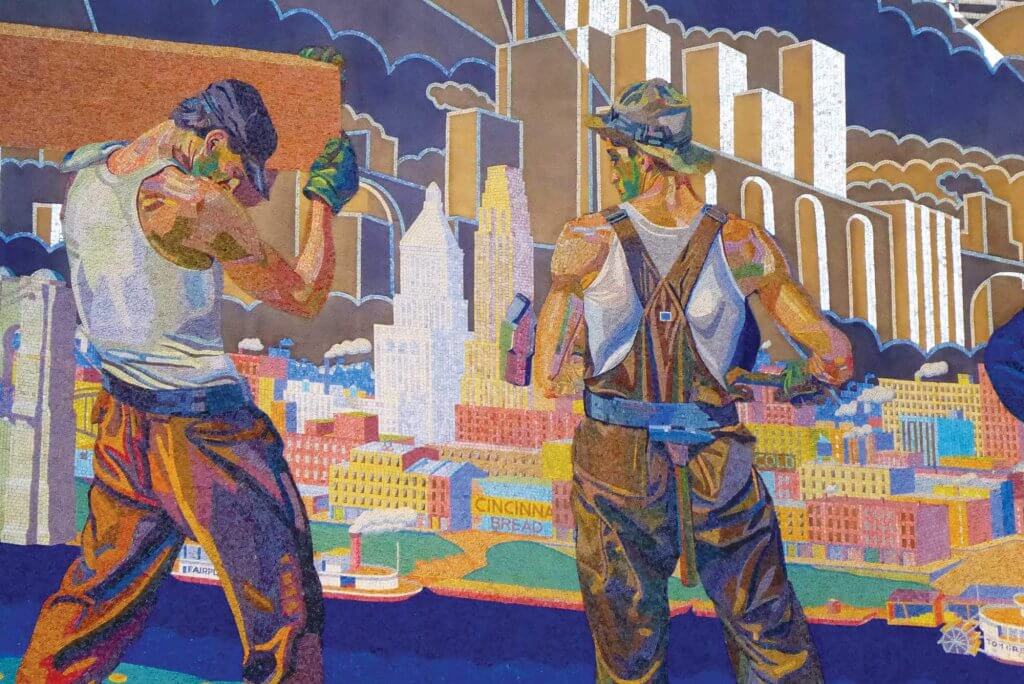
The exhibit is displayed in the very building, Union Terminal, where Holocaust survivors arrived in our community with meager belongings to begin the next chapter of their lives. Six local stories are highlighted in videos with biographies of the persons featured assembled.
“We wanted to spotlight the role this building and the city played in the story,” said Congedo. “It has never been integrated with a local story to the degree we’ve [done] here.”
Visitors need at least two hours to absorb the information they’re seeing and hearing and to grasp what it took for survivors to rebuild their lives.
“This didn’t have to happen,” said Congedo of the atrocities at Auschwitz. “It happened because everyday people made everyday choices in everyday moments. So, the question we have to ask ourselves: what choices are we making in everyday moments that bend our nature to better or worse outcomes?”
The exhibition shows what can happen when one man’s hatred and rhetoric can whip up supporters and get seemingly ordinary people to do unspeakable things.
“Because of the solidarity and the unity we have with the Jewish people, it’s really important for us to be part of this,” said Musgrave, regarding Catholic attendance at the exhibition. “It would be a shame to have access to this type of history, these relics, this memorial and not go and see it while we can.”


Auschwitz. Not long ago. Not far away. runs through April 12, 2026.
This article appeared in the February 2026 edition of The Catholic Telegraph Magazine.