We are Not Just Another Brick in the Wall
by Kenneth Craycraft
In 1979, the rock group Pink Floyd released a concept album called “The Wall.” Written by now disgraced band leader Roger Waters, the record is angry, depressing, and claustrophobic. It is the fictional story of a cynical, despondent rock star who attempts to construct a wall around himself to insulate himself from everything and everyone. The album yielded the hit song “Another Brick in the Wall, Pt. 2,” which contains such familiar lyrics as “We don’t need no education,” “Hey, teacher, leave them kids alone,” and “All in all, you’re just another brick in the wall.” Despite its bleak, bitter tone, the album was an enormous commercial success, selling more than 30 million copies and confirming Pink Floyd as rock-and-roll royalty.
The image of bricks in the wall from that album is far removed from the theme of this issue of The Catholic Telegraph. It’s a useful place to start, however, by juxtaposing the hopeless despair of the album with the hopeful anticipation of the fullness of the Kingdom of God. In the album, bricks are used to build a barrier that the narrator thinks will shield him from all the things he perceives make him unhappy. As he attempts to shut out the world, the best he hopes for is to become—in the words from one of the album’s singles—“comfortably numb.” The bricks in “The Wall” serve the purpose of false security from isolation and despair. Bricks build barriers.
In contrast, when we Catholics think of building something brick-by-brick, it is not to construct isolating walls but rather reconciling bridges.
Bricks and Bridges
We commonly refer to the Pope as the “Pontiff,” which is derived from the Latin compound word “pontifex,” meaning bridge maker. Adopted from ancient Roman references to emperors, in the Catholic tradition it refers to the office of bishop generally. The bishop is the “bridge” between us and God, invested by Christ with authority to “bind and loose” on earth and in heaven. This is derived from the Gospel of Matthew (and synoptic parallels), where Jesus says to the Apostles, “Amen, I say to you, whatever you bind on earth shall be bound in heaven, and whatever you loose on earth shall be loosed in heaven” (Mt 18:18).
The context of this commission is Jesus’ broader teaching about repentance and reconciliation. This is the scriptural foundation for the Sacrament of Confession, through which we are reunited to the Church and God. The Apostles were given the authority to hear the confession of the repentant sinner then build a bridge back to God. As successors to the Apostles, bishops inherit this bridge-building authority. The Pope, as primus inter pares (“first among equals”), is the “pontifex maximus,” a doctrine based in St. Peter’s confession to Jesus and Jesus’ commission of Peter as what we now call the first pope (Mt 16:16).
Thus, the “bricks” of this bridge are for the purpose of forgiveness and reconciliation, not despair and isolation. Bricks do not shut us off from everyone else but rather reconcile us to God and others. From this central truth of the Christian tradition, we derive our own responsibility both to be reconciled to our brothers and sisters and to be instruments of reconciliation. Brick by brick, we build bridges, not walls.
Bricks, Buildings, and the Body of Christ
About 800 or so years ago, St. Francis of Assisi knelt before a crucifix at the church of San Damiano in Italy. The church building was in serious disrepair and on the verge of collapse. As Francis prayed before the crucifix, Christ spoke to him from the cross, saying three times, “Francis, go and repair my Church, which, as you can see, is falling into ruins.” Initially taking the charge to be about the church building in San Damiano, St. Francis gathered the bricks and mortar to repair the chapel there.
Of course, St. Francis soon realized that his commission was not merely to rebuild the physical church building at San Damiano but also to spiritually rebuild and reawaken the faith in the hearts of his fellow Christians. “To rebuild the Church” became the mandate for Christian renewal and revival, using spiritual bricks to restore what had fallen into neglect and disrepair. Brick by spiritual brick, St. Francis was instrumental in rebuilding the Church not only in the 13th century but in the centuries to follow. St. Francis never became a priest but still played a pivotal role in Christian revival, and his legacy lives on as we, too, are called to repair the Church.
In Pink Floyd’s album “The Wall,” bricks serve to isolate the despairing narrator from a world that he perceived had irreparably wounded him. In the Catholic tradition, bricks are the means by which bridges and buildings are built, not for isolation but for the reconciliation Christ offers to all of us, regardless of the wounds we have inflicted or incurred. Brick by brick, Christ builds a bridge between us and heaven, entrusting the magisterium to its care and maintenance. And from the cross, Our Lord calls us to maintain and repair the Church, brick by spiritual brick.
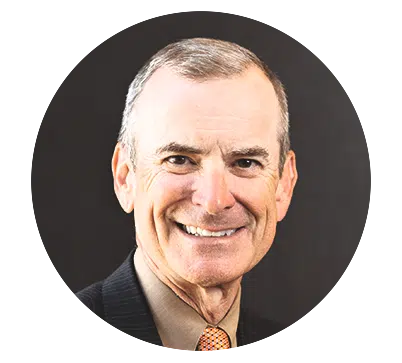 Dr. Kenneth Craycraft holds the James J. Gardner Chair of Moral Theology at Mount St. Mary’s Seminary & School of Theology. He is the author of Citizens Yet Strangers: Living Authentically Catholic in a Divided America.
This article appeared in the January 2026 edition of The Catholic Telegraph Magazine. For your complimentary subscription, click here.
The Author